


Wharfage charges are a common part of port call expenses, but how they’re calculated and who pays them can vary depending on the port, terminal, and cargo involved. For port agents, those details matter when preparing a proforma disbursement account (PDA) and reconciling the final costs after a vessel completes loading or discharge.
In this article, we’ll explain what wharfage charges are, how ports calculate them, and who is responsible for paying them. We’ll also walk through a practical calculation example, cover how to estimate wharfage on a PDA, and explain how to reconcile the actual charge on the final disbursement account (FDA).
We’ll finish with common mistakes to watch for and how port agency software like Base can help manage these charges alongside the rest of a port call’s expenses.
What Are Wharfage Charges?

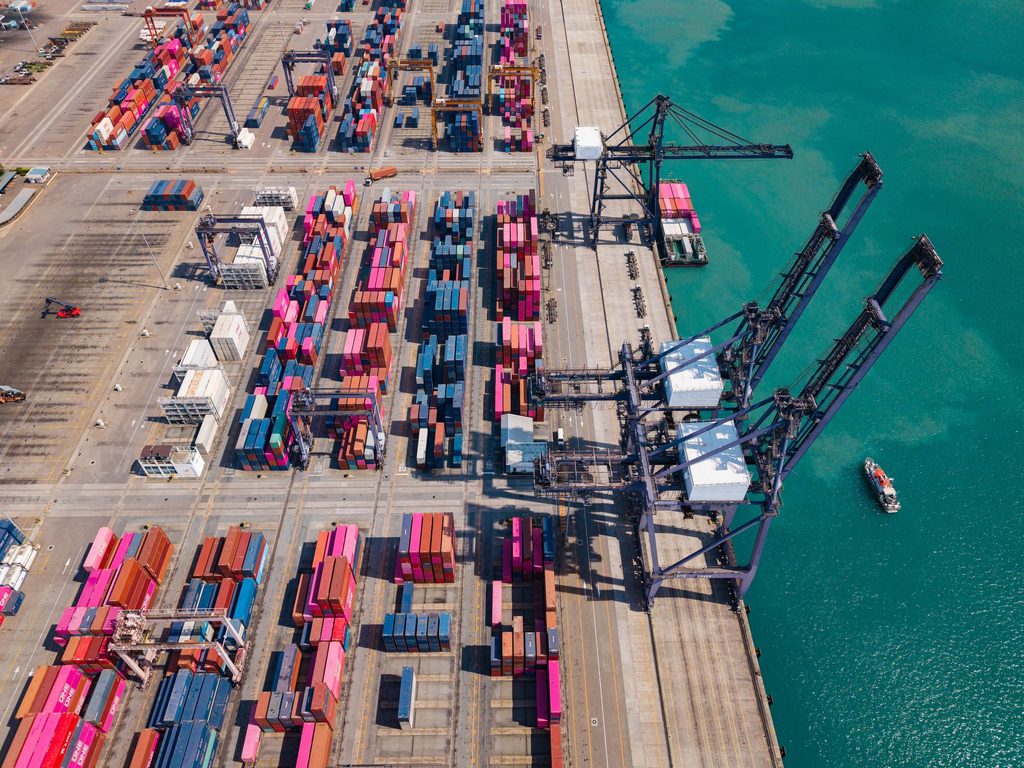
Wharfage charges are fees assessed on cargo moving through a port’s wharf or terminal facilities.
They’re typically calculated using the cargo’s weight, volume, number of units, or another measurement specified in the applicable port tariff. Ports and terminal operators assess wharfage for the use of their facilities in connection with cargo movements. The charge may apply to imports, exports, or both.
For port agents, wharfage is one of the expenses that may need to be estimated before a vessel arrives and reconciled after cargo operations finish.
You’ll often see wharfage listed alongside other port charges, including dockage, pilotage, towage, and terminal fees.
Wharfage generally relates to cargo moving through the terminal, while dockage or berthage relates to the vessel occupying a berth. Both charges may apply during the same port call.
How Are Wharfage Charges Calculated?
Wharfage charges are calculated using rates published by the relevant port authority or terminal operator.
The basic calculation is:
Wharfage charge = Applicable tariff rate × Chargeable cargo quantity
How that works depends on the cargo. A bulk carrier, for example, might be charged per metric ton, while a container vessel could be charged per container.
Other cargo types may be assessed by volume, measurement tons, or individual units.
Common Methods Used to Calculate Wharfage
| Charging Method | How It Works | Example |
|---|---|---|
| Per metric ton | Rate multiplied by cargo weight | 5,000 MT × $2.50 = $12,500 |
| Per cargo unit | Fixed charge for each unit | 200 units × $15 = $3,000 |
| Per container | Rate based on container count or type | 100 containers × $40 = $4,000 |
| Per measurement unit | Charge based on volume or another specified measurement | 1,000 m³ × $3 = $3,000 |
These examples use illustrative rates. Actual rates and charging methods depend on the port, terminal, and cargo involved.
The Port Houston tariff schedules, for example, distinguish between general cargo facilities and the Barbours Cut and Bayport container terminals. Different tariffs can apply depending on where the vessel is calling. The Port Authority of New York and New Jersey also publishes tariffs with rates that vary by commodity and cargo classification.
What Can Change the Wharfage Amount?
Several factors can affect the calculation:
- Cargo classification: Different commodities may have different tariff rates.
- Cargo quantity: The actual loaded or discharged quantity may differ from the nomination.
- Port or terminal: Different facilities may publish separate tariff schedules.
- Import or export status: Some tariffs distinguish between inbound and outbound cargo.
- Minimum charges and exemptions: Certain cargo movements may qualify for special provisions.
- Measurement basis: The tariff may specify metric tons, short tons, cubic meters, or another unit.
Pay particular attention to the measurement basis. If the tariff quotes a rate per short ton but your cargo figures are in metric tons, you’ll need to convert the quantity before calculating the charge.
Some tariffs also use weight or measurement, whichever produces the higher amount.
Charges based on vessel length or time alongside are generally associated with dockage or berthage. Check the tariff description before recording either as wharfage.
How to Estimate Wharfage Charges on a PDA
When you’re putting together a PDA, you probably don’t have the final cargo figures yet. You’re working with what’s available from the nomination, cargo manifest, or loading instructions.
The estimate needs to reflect the applicable tariff and the most current information available for the call.
Confirm the Applicable Port Tariff
Start with the port and terminal where the vessel is scheduled to load or discharge.
Check that the tariff covers the correct commodity and facility, and confirm its effective date, measurement units, and any minimum charges or exemptions.
A change in terminal assignment can affect the rate, particularly at ports where different facilities operate under separate tariff schedules.
Establish the Estimated Cargo Quantity
Depending on the operation, the preliminary quantity may come from:
- Cargo manifest or nomination details
- Loading or discharge instructions
- Estimated cargo weight or volume
- Container counts or other unit quantities
For a bulk carrier, the nominated tonnage might be all you have before arrival. You can use that figure for the PDA, with the final charge subject to the actual cargo quantity.
Calculate the Estimated Wharfage
Let’s say you’re handling a bulk carrier expected to discharge 8,000 metric tons of cargo. For this example, the applicable wharfage rate is $2.75 per metric ton.
| PDA Calculation | Amount |
|---|---|
| Estimated cargo | 8,000 MT |
| Wharfage rate | $2.75/MT |
| Estimated wharfage | $22,000 |
8,000 MT × $2.75 = $22,000
Assuming the charge belongs on the vessel’s account, you’d include $22,000 in the PDA.
Record the tariff reference, estimated quantity, and calculation method with the charge. If the cargo nomination changes before arrival, the estimate may need to be updated.
For agencies managing several calls at once, disbursement accounting software can help keep those estimates and supporting records associated with the relevant job.
Who Pays Wharfage Charges on a Port Call?
Who pays wharfage depends on the port’s billing rules and the commercial agreements governing the cargo movement.
Wharfage is generally a cargo-related expense, so the cargo owner, shipper, consignee, or another cargo-side party may ultimately be responsible for it.
However, some ports require the vessel or its agent to settle or guarantee payment, even when the expense belongs to cargo interests.
Port Houston provides an example of this arrangement. Its tariff provisions have addressed the vessel’s guarantee of terminal and wharfage payments even where the underlying liability belongs to the cargo owner.
That means an agent may need to include wharfage on the vessel’s disbursement account, even if the amount will ultimately be recovered from another party.
Before adding the charge to the PDA, confirm:
- Port billing rules: Who does the tariff identify as responsible for payment?
- Commercial responsibility: Who bears the expense under the charterparty or other applicable agreements?
- Principal instructions: Should the charge appear on the vessel’s PDA, be billed separately, or be settled through another arrangement?
Getting this straight before the call helps avoid questions later about why the charge appeared on the vessel’s account or why it was billed separately.
How Wharfage Charges Move From the PDA to the FDA

Once the vessel finishes loading or discharging, you’ll have the actual cargo figures to work with. You can then check the wharfage estimate against the amount charged by the port or terminal.
The final amount may differ because the cargo quantity changed, a different tariff provision applies, or the terminal made an adjustment.
Recalculate Using Actual Cargo Figures
Returning to our earlier example, the vessel was expected to discharge 8,000 metric tons, with estimated wharfage of $22,000.
The vessel actually discharges 8,400 metric tons.
At the same illustrative rate of $2.75 per metric ton, the final wharfage is $23,100.
| Item | PDA Estimate | FDA Actual |
|---|---|---|
| Cargo quantity | 8,000 MT | 8,400 MT |
| Wharfage rate | $2.75/MT | $2.75/MT |
| Wharfage charge | $22,000 | $23,100 |
| Difference | +$1,100 |
The additional 400 metric tons accounts for the $1,100 increase between the PDA and FDA.
Reconcile the Charge Against the Terminal Invoice
Before finalizing the FDA, compare your calculation against the invoice received from the port authority or terminal.
Depending on the operation, the supporting documents may include:
- Port authority or terminal invoice
- Final loading or discharge figures
- Cargo manifests or quantity statements
- Applicable wharfage tariff
- Adjustments, exemptions, or credits
Check that the measurement units agree, too. If the terminal bills in short tons while the cargo records use metric tons, you’ll need to account for that difference.
The FDA should reflect the actual amount payable under the applicable tariff and billing arrangement.
In our example, the final cargo figures explain the $1,100 increase. If the terminal’s invoice shows a different amount, the agent needs to identify the reason before closing out the account.
Common Wharfage Charge Mistakes That Lead to PDA and FDA Disputes
Most wharfage calculation errors come down to incorrect tariff information, cargo figures, or billing arrangements.
Here are some common issues agents run into:
- Using an outdated tariff: The port has revised its rates, but the PDA uses figures from an earlier call.
- Applying the wrong cargo classification: A general cargo rate is used when the commodity falls under a different tariff category.
- Confusing wharfage with berthage: A vessel-related berth charge is recorded as wharfage or duplicated elsewhere in the account.
- Using preliminary cargo figures on the FDA: The actual loaded or discharged quantity differs from the nomination, but the estimate hasn’t been updated.
- Assigning the charge to the wrong account: The commercial arrangement requires separate settlement or billing to cargo interests.
- Missing supporting documents: The final amount cannot be verified against the terminal invoice or cargo records.
During FDA reconciliation, give the wharfage line another look if the cargo quantity, terminal assignment, or billing arrangement changed during the call.
Managing Wharfage Charges in Base
Wharfage is one of several charges an agent needs to account for when preparing a PDA. With different tariffs, contracted rates, and cargo quantities to consider, having reliable port cost information makes a difference.
Base helps agents prepare estimates using published port tariff data and manage those charges throughout the port call.
Here’s how Base supports the process:
- Access current port tariffs: Select a port, and Base pulls published tariff information for charges such as pilotage, towage, berth dues, linesmen, and terminal services. Base stores tariff data for more than 100 U.S. ports and automatically tracks published rate updates.
- Prepare the PDA using agreed rates: Apply your principal’s contracted rates and agency fees alongside the applicable port charges. For wharfage, you’ll still need to confirm the cargo quantity, tariff rate, and billing arrangement.
- Record actual charges as they come in: Every PDA line item carries into the FDA. As invoices and actual expenses arrive, Base replaces the estimates with the final amounts.
- Review differences between the PDA and FDA: Base keeps the original estimates and actual charges connected to the port call, making it easier to see where costs changed and review the supporting records.
For example, a port call with a $22,600 PDA and $21,940 in actual charges would show a $660 reduction on the FDA. That’s the kind of difference agents need to account for when reconciling wharfage and other port expenses.
If your agency is still working between spreadsheets, tariff documents, and separate accounting records, see how Base handles PDAs and FDAs.
Final Thoughts: Getting Wharfage Right on Every Port Call

For port agents, calculating wharfage is one part of preparing an accurate disbursement account. You need the right tariff, the expected cargo quantity, and a clear understanding of who is paying the charge.
Once the vessel finishes cargo operations, the final figures and terminal invoice give you what you need to reconcile the amount on the FDA.
At Base, we focus on keeping that financial information connected to the port call. Agents can manage expenses, invoices, and supporting documents within the same job, so the records are available when it’s time to review the final account.
If your agency is still handling PDAs and FDAs across multiple spreadsheets and systems, request a Base demo to see how we handle port call accounting.
Key Takeaways
- Wharfage charges are cargo-related port fees assessed according to the applicable port or terminal tariff.
- Calculation methods vary by cargo and facility. Rates may be based on weight, volume, containers, or individual cargo units.
- Payment responsibility depends on port rules and commercial agreements. The vessel may be required to settle a charge ultimately borne by cargo interests.
- PDA estimates use expected cargo quantities. The final amount may change once loading or discharge is complete.
- FDA reconciliation requires supporting records, including the applicable tariff, final cargo quantities, and terminal invoice.
- Job-level accounting records help agents track wharfage from the original estimate through final reconciliation.
Frequently Asked Questions
Is wharfage the same as dockage or berthage?
No. Wharfage generally applies to cargo moving through a wharf or terminal, while dockage or berthage is associated with a vessel occupying a berth.
Both charges may apply during the same port call, with separate rates and calculation methods.
Are wharfage charges included in terminal handling charges?
That depends on the port and terminal. Wharfage and terminal handling are distinct charges, although some terminal agreements may bundle them or account for them together.
Check the applicable tariff and invoice to see which charges are already included.
Are wharfage charges the same at every port?
No. Port authorities and terminal operators establish their own tariff schedules. Rates can vary according to cargo classification, terminal, movement type, and measurement basis.
Can wharfage charges be waived or reduced?
Some tariffs include exemptions, reduced rates, or special provisions for qualifying cargo movements. The relevant tariff or commercial agreement determines eligibility.
Is wharfage charged on both imported and exported cargo?
Wharfage may apply to imported and exported cargo. Some ports use different rates or exemptions depending on the direction of the cargo movement.


