


A vessel may have called at US ports dozens of times, but that doesn’t mean its paperwork is still in order. Certificates expire, operators change, and the information carried over from a previous voyage can become outdated.
One document worth checking early is the Certificate of Financial Responsibility (COFR).
A COFR is issued by the US Coast Guard’s National Pollution Funds Center (NPFC) and confirms that a vessel’s designated operator has demonstrated financial responsibility for pollution-related liabilities under the Oil Pollution Act of 1990 (OPA 90) and applicable CERCLA requirements. It is generally required for vessels over 300 gross tons, tank vessels over 100 gross tons, and vessels of any size involved in certain oil lightering or transshipment activities.
For an agent preparing a US arrival, there are a few things to establish: whether the vessel needs a COFR, whether its certificate is current, and whether the operator information still matches.
Here’s how to handle those checks, where to find the official records, and what to do if something doesn’t line up.
What Is a COFR?
A Certificate of Financial Responsibility provides evidence that a vessel’s designated operator can meet certain financial obligations if the vessel causes an oil spill or hazardous substance release in US waters.
The requirement comes from federal pollution laws, including OPA 90 and the Comprehensive Environmental Response, Compensation, and Liability Act (CERCLA). The US Coast Guard’s National Pollution Funds Center administers the program and issues certificates after reviewing the required evidence of financial responsibility.
Operators can establish that financial responsibility through approved arrangements such as insurance guarantees, surety bonds, or self-insurance.
This is where P&I insurance sometimes causes confusion. An operator may have pollution liability coverage through its P&I club, but that insurance certificate alone doesn’t establish that the vessel holds a valid COFR. The NPFC must issue the applicable certificate.
COFRs are issued for terms of up to three years. The certificate identifies the designated COFR operator, and its validity can be checked through the NPFC’s records.
Which Vessels Need a COFR Before Entering a US Port?
For most commercial vessels, gross tonnage is the starting point.
Under 33 CFR § 138.20, vessels greater than 300 gross tons generally require a COFR when operating in US navigable waters. Tank vessels greater than 100 gross tons are also subject to the requirement, along with vessels of any size engaged in certain oil lightering or transshipment activities in the US Exclusive Economic Zone.
Here’s how that applies to common vessel categories.
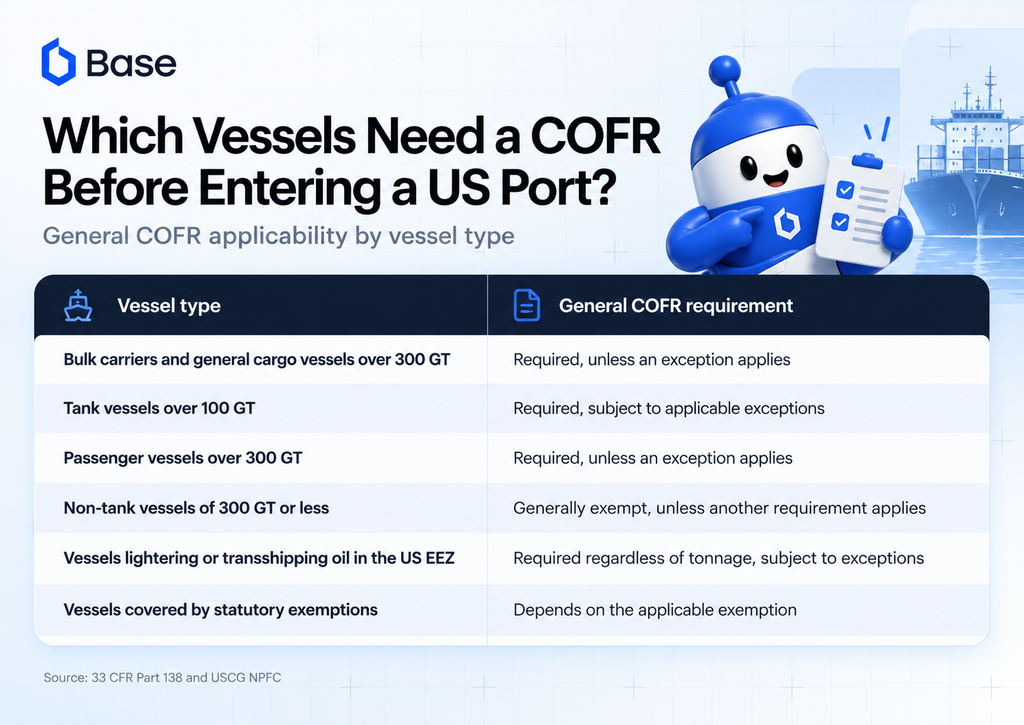
These are general guidelines. The vessel’s activity and any applicable exceptions still need to be considered.
The full requirements are covered under 33 CFR Part 138, and the NPFC provides guidance on which vessels require certification.
COFR is also one of several documents agents may need to review during maritime compliance preparation, alongside the other certificates and records required for a particular vessel and port call.
Once you’ve established that a COFR is required, the next question is whether the vessel’s existing certificate is valid for the upcoming call.
The 5-Minute COFR Pre-Arrival Check
Most agents already have the information needed to begin a COFR check by the time a vessel is nominated. The vessel particulars, operator details, and ETA are usually available, although the supporting certificate information may need to be requested.
The COFR review belongs alongside the other document checks in your vessel agent checklist. For an existing certificate with no apparent complications, these five checks provide a useful starting point.
1. Confirm the Vessel’s Identity
Start with the IMO number and compare the vessel name, flag, and gross tonnage against the nomination.
Using the IMO number helps identify the correct vessel, particularly when a ship has changed names or several vessels have similar names.
Agents can also use Base’s Open Gov vessel directory to look up historical vessel arrival information. This can provide additional context about previous US calls, although the NPFC remains the authoritative source for COFR status.
If the COFR record contains particulars that differ from those supplied for the voyage, check which information is current. Changes to a vessel’s name or tonnage may need to be reflected in its COFR records.
2. Check the COFR Status and Expiration Date
Look up the vessel’s active COFR record and confirm its expiration date against the planned arrival and expected port stay.
Schedule changes make expiration dates particularly important. A vessel that was expected to depart before its COFR expired could remain in port longer because of congestion, weather, or cargo delays.
Example: A Bulk Carrier Bound for Houston
A bulk carrier is nominated for Houston with an ETA of October 18. During the initial paperwork review on October 12, the agent checks the vessel’s COFR and finds that it expires on October 16, while the ship is still expected to be at sea.
The agent flags the expiration to the principal that same day, including the COFR number, expiration date, and expected arrival. The message asks the operator to confirm its renewal arrangements and provide evidence of a valid COFR covering the Houston call.
The issue also goes into the pre-arrival checklist so whoever is handling the next shift knows that certification is still outstanding. If a valid COFR cannot be confirmed, the operator needs to address the matter with the NPFC and coordinate any necessary arrival arrangements with the Coast Guard.

3. Review the Guarantor Information
The guarantor provides the financial assurance supporting the COFR when the operator uses an approved guarantee arrangement.
Agents may not have access to the underlying guarantee documentation, although a recent change in insurance arrangements or a question about coverage is reason to request confirmation from the operator.
If there is a concern about whether the financial responsibility arrangements remain valid, the operator and NPFC are the appropriate parties to resolve it.
4. Compare the COFR Operator With the Current Operating Arrangements
Pay particular attention to vessels that have recently changed management or operating responsibility.
The COFR identifies a designated operator who is responsible for meeting the certification requirements. That designation may differ from the commercial operator or technical manager identified in other voyage documents.
For example, a nomination might arrive from a new management company while the COFR still lists the same designated operator as the previous voyage. The agent should establish whether this reflects a routine management change or a change in the party responsible for COFR compliance.
An actual change of designated COFR operator can require a new certificate.
5. Review the COFR Information Against the eNOAD
Before preparing the Electronic Notice of Arrival and Departure (eNOAD), compare the relevant vessel and operator information with the current COFR record.
The filing includes information about the vessel’s owner and operator, along with the COFR operator where applicable. If the records contain different company names, establish which party belongs in each field.
A discrepancy may have a straightforward explanation, especially when several companies are involved in managing or operating a vessel. What matters is having the correct information for the current voyage.
Where Can You Search for a Vessel’s COFR?
The US Coast Guard’s National Pollution Funds Center maintains the official COFR records.
Agents can use the USCG Active Vessel COFR Status page to access active certificate information. The NPFC publishes vessel records in downloadable formats and maintains separate listings for fleet and master certificates.
Have the vessel’s name, identification number, and operator details available when reviewing the records.
The information to look for includes the COFR number, designated operator, certificate expiration date, and vessel particulars. For an individual certificate, the NPFC record includes the vessel name and gross tonnage information.
Some vessels are covered under fleet or master certificate arrangements. If an individual vessel doesn’t appear where expected, check whether one of those arrangements applies before concluding that it has no coverage.
If the vessel still cannot be identified, ask the operator for the certificate number and supporting details.
It’s worth keeping a record of the check alongside the nomination. An agent taking over the job on another shift should be able to see which certificate was reviewed and whether any questions remain outstanding.
What Happens if a Vessel’s COFR Is Missing or Expired?

An expired or missing COFR can become a serious problem for a vessel that is required to carry one.
Under 33 CFR § 138.170(d), the US Coast Guard may deny a vessel entry into a US port or detain it when the required COFR or evidence of financial responsibility has not been established and maintained.
The regulation also provides for withholding or revoking vessel clearance, civil penalties, and potential seizure or forfeiture, depending on the circumstances.
For a port agent, the next steps depend on what the check reveals.
If the COFR Has Expired
Contact the operator and request confirmation of the vessel’s current certification status.
The operator may have submitted a renewal application or obtained an updated certificate that wasn’t included in the documents sent with the nomination. Check the official NPFC record to establish the current position.
COFR operators are generally required to request renewal at least 21 days before expiration, with requests submitted no earlier than 90 days before that date. The regulations allow exceptions to the 21-day deadline in certain circumstances.
If the vessel is due tomorrow and its COFR has expired, the issue needs immediate attention from the operator. The agent should also establish whether the planned arrival needs to be discussed with the relevant Coast Guard authority.
If No COFR Can Be Found
First, check that the vessel is subject to the requirement and that its identifying information is correct.
An unsuccessful search might involve an incorrect vessel name, a change in particulars, or coverage under a master certificate. The operator should be able to provide information identifying the applicable COFR arrangement.
If the vessel genuinely has no certificate and requires one, the operator will need to work through the NPFC application process.
A new application generally must be submitted at least 21 days before the certificate is required, subject to the exceptions provided in the regulations.
For a vessel making its first US call, that timeline deserves attention well before the final arrival preparations begin.
If the Operator Information Doesn’t Match
A difference between the nomination and COFR record requires a closer look at the companies involved.
The vessel may have a new technical manager while retaining the same designated COFR operator. Alternatively, the responsible operating company may have changed, creating a need for new certification arrangements.
The agent should ask the operator to confirm the relationship and whether a reportable change has occurred.
If the certificate needs updating, the operator should arrange the necessary action through the NPFC. Keep the principal informed of any unresolved issue that could affect the arrival schedule.
How Does COFR Verification Connect to eNOAD Filing?
The COFR check and eNOAD preparation involve some of the same vessel information, which is why they fit naturally into the same pre-arrival review.
An agent preparing an eNOAD filing needs current particulars, including the vessel’s IMO number, MMSI, owner, operator, and other required voyage details. The filing also accounts for the designated COFR operator where applicable.
That last detail can require some attention.
A shipowner may appoint a commercial operator, use a separate technical management company, and designate another responsible party for COFR purposes. An agent receiving documentation from several parties needs to identify which company should appear in each applicable field.
For a vessel that recently changed management, I’d pay particular attention to the nomination, current operator information, and the NPFC record before completing the filing.
The COFR status itself also needs to be checked. Submitting an eNOAD with accurate vessel information doesn’t resolve a missing certificate or an expired one. Any outstanding certification issue remains with the designated operator and the relevant authorities.
How Base Helps With COFR Checks and Pre-Arrival Documentation
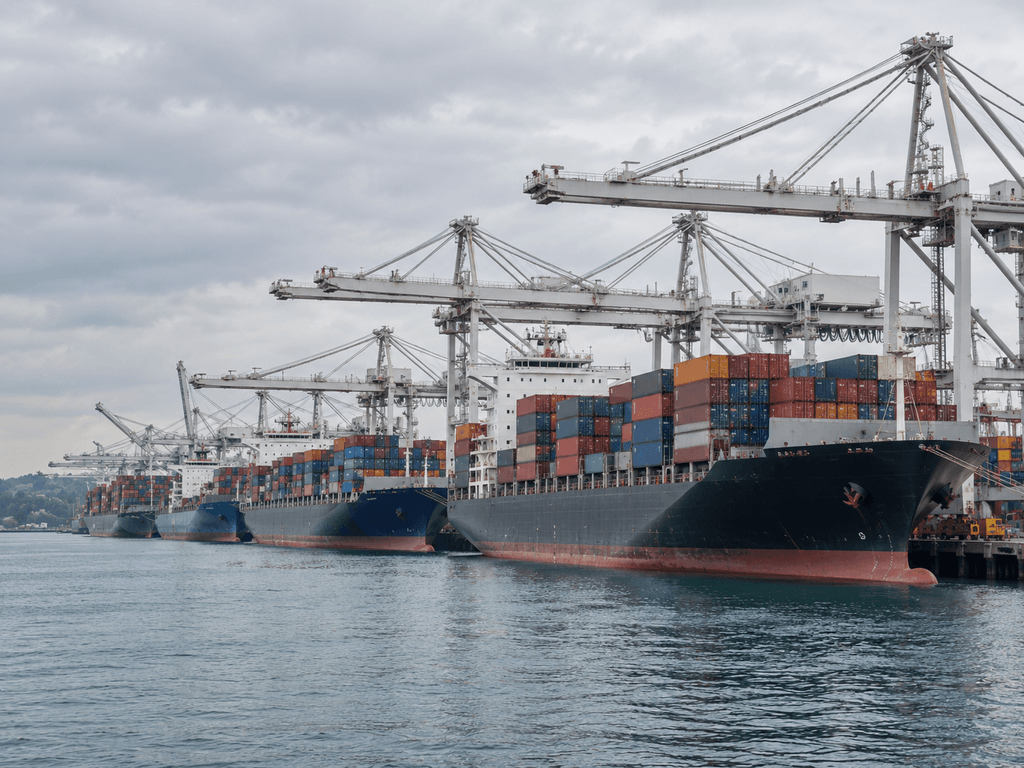
For agents handling repeat calls, the COFR check is familiar work. The details may already be in an old nomination, a vessel record, or a certificate copy received several months earlier.
Those records still need to be reviewed against the current certification information.
Base brings vessel particulars, COFR information, and pre-arrival documentation into the same operational workflow, allowing agents to check the vessel while preparing the job.
Review COFR Status and Vessel Compliance Information
With Base’s vessel compliance software, agents can search using a vessel’s name, IMO number, or MMSI.
The lookup provides COFR status alongside other compliance information, including USCG inspection history, Port State Control records, deficiencies, and reported incidents.
According to Base’s published product information, COFR and fleet registry records refresh daily. USCG inspection data is queried live.
The vessel record also provides a place to maintain supporting certificates and track expiration dates, making those documents available for future calls.
Agents can review the information in Base as part of their pre-arrival preparation and refer to the official NPFC records whenever authoritative confirmation or further investigation is needed.
Use Vessel Records to Prepare eNOAD Filings
Base uses existing vessel and voyage information to pre-populate 19 required eNOAD fields.
That includes data associated with the vessel’s IMO number, MMSI, COFR information, crew roster, and previous port calls.
For a vessel the agency has handled before, much of the information may already be available in its record. The agent can review the populated fields against the current nomination and update anything that has changed.
This is especially useful for details that are regularly reused between port calls, such as vessel identification and operator information.
Keep Track of Each eNOAD Submission
Base also maintains the filing status for each voyage, showing whether the eNOAD is in draft, submitted, or confirmed.
Those statuses are linked to the relevant vessel and voyage records.
For an agency with several US arrivals underway, the team can check which filings still need attention and which have already received confirmation. The same vessel record remains available when the next nomination comes in.
Keep COFR Checks in Your Pre-Arrival Routine

A vessel that called at a US port last month can arrive with a different operator or a certificate approaching expiration. Checking its current COFR record takes little time when the information is available, while resolving a certification issue can involve the operator, guarantor, and NPFC.
That makes the initial nomination review a sensible point to verify the certificate.
At Base, we help agents keep this information connected to the vessels and port calls they’re already managing. COFR status, certificate records, expiration dates, and eNOAD information are available as part of the wider pre-arrival workflow.
If your team regularly handles US port calls, take a look at Base’s vessel compliance software to see how it supports COFR checks and pre-arrival documentation.
Key Takeaways
- A COFR is issued by the US Coast Guard’s National Pollution Funds Center and confirms that a designated vessel operator has demonstrated the required financial responsibility for certain pollution liabilities.
- Vessels over 300 gross tons and tank vessels over 100 gross tons generally require a COFR to operate in US waters, along with vessels involved in certain oil lightering and transshipment activities, subject to applicable exceptions.
- Agents should check the COFR’s status, expiration date, vessel particulars, and designated operator before a US port call.
- Under 33 CFR § 138.170(d), the Coast Guard may deny entry or detain a vessel that lacks the required COFR or evidence of financial responsibility.
- Base provides COFR status lookups, daily COFR data refreshes, certificate tracking, and pre-populated eNOAD information to support pre-arrival preparation.
Frequently Asked Questions
How long is a COFR valid?
The US Coast Guard issues COFRs for terms of up to three years. Operators generally must request renewal between 90 and 21 days before expiration, although the regulations allow certain exceptions to the submission deadline.
Can I search for a vessel’s COFR using its IMO number?
An IMO number helps identify the correct vessel when reviewing COFR records. The NPFC publishes active vessel certificate information, which can be accessed through its website. Agents should use the available identifying information to find the correct record and confirm its status.
Is P&I insurance the same as a COFR?
No. P&I insurance may support the operator’s evidence of financial responsibility, but the certificate itself must be issued by the NPFC. A vessel can have P&I insurance and still lack the required COFR.
Who is responsible for obtaining a COFR?
The designated COFR operator is responsible for complying with the certification requirements, including providing financial responsibility evidence, applying for the certificate, and maintaining the necessary records. Port agents may assist with document collection and verification during pre-arrival preparation.
Does a vessel need a new COFR when it changes operators?
A change in the designated COFR operator can require a new certificate. Changes involving technical managers or other operating companies should be reviewed to establish whether they affect the designated COFR operator and the existing certification arrangements.


