


Before a vessel arrives in port, the ship agent may need to arrange free pratique with the local health authority. This typically involves obtaining a Maritime Declaration of Health from the master, submitting the required documents, and confirming that clearance has been granted.
The timing of that clearance can have financial implications. Under certain charter party terms, a delay in obtaining free pratique can affect the validity of a Notice of Readiness and when laytime begins.
We’ll look at the filing requirements, how free pratique is granted, and what agents need to record during the port call.
What Is Free Pratique?
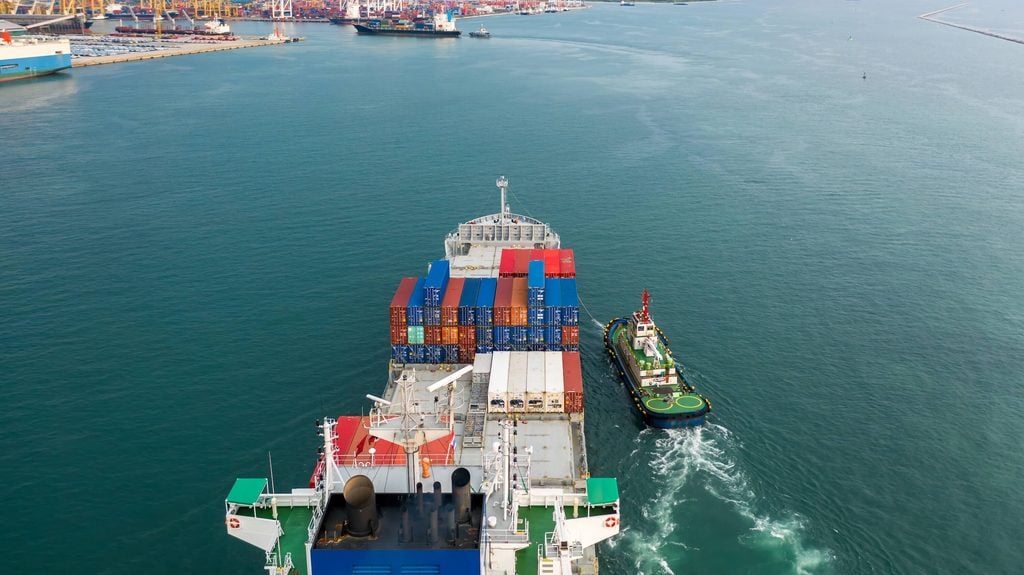
Free pratique is permission granted by a port’s health authority allowing a vessel to proceed with port activities without quarantine restrictions. It is generally issued after the authority reviews the ship’s health information and determines whether further public-health measures are necessary.
The international framework comes from the World Health Organization’s International Health Regulations.
Article 28 encourages authorities, where practicable, to grant free pratique by radio or another means of communication using information received before a vessel arrives.
There are several ways a vessel may receive or await clearance:
Radio pratique
The health authority grants free pratique remotely, using information submitted before arrival. The vessel can receive confirmation without a health officer physically boarding the ship.
Boarding inspection
The authority requires an onboard assessment before granting clearance. This may happen when the declaration reports illness, when information is incomplete, or when officials identify another public-health concern.
Quarantine anchorage
If free pratique is withheld, the vessel may be instructed to proceed to a designated quarantine anchorage. Crew movements, disembarkation, and other activities may be restricted until the authority provides further instructions.
A vessel requesting free pratique may fly the yellow Quebec (Q) flag, traditionally used to signal that it requests health clearance.
Free pratique is also separate from customs, immigration, and other port entry formalities. A vessel may receive health clearance while other port clearance documents or approvals remain outstanding.
How Do Ship Agents Obtain Free Pratique Before Arrival?
The process usually begins while the vessel is still at sea. The agent collects the necessary health information from the master, submits the appropriate documents to the destination port, and follows up until clearance is confirmed.
The requirements vary by country and port authority, but here are the filing requirements and submission windows for several international ports:
The Maritime Declaration of Health
The main document is the Maritime Declaration of Health (MDH).
Under Article 37 of the International Health Regulations, the master completes the declaration using the model provided in Annex 8. Where a ship’s surgeon is carried, the declaration is also countersigned by that person.
The MDH provides the health authority with information about the vessel’s voyage and the health of those aboard.
Depending on the form and the port’s requirements, this information can include:
- Vessel particulars, previous ports of call, and voyage details.
- Illnesses or symptoms reported among crew or passengers.
- Deaths occurring during the voyage, excluding those resulting from accidents.
- Relevant exposure to infectious diseases or affected areas.
- Other health information requested by the authority.
The agent may also need to confirm the vessel’s Ship Sanitation Certificate and provide supporting documentation.
Who submits the Maritime Declaration of Health?
The master is responsible for completing the declaration. In many ports, the appointed ship agent transmits the MDH and files the application for free pratique with the relevant authority.
Some countries allow submission directly by the master, while others use local electronic reporting systems.
The agent should confirm which party is responsible for submission and which documents the destination port requires.
When Must the Agent Apply for Free Pratique?
There is no single filing deadline that applies to every international port. For example, the following requirements were identified in port authority guidance reviewed in October 2026:
| Port / Country | Filing requirement | Pre-arrival window |
|---|---|---|
| Hong Kong | Application for Free Pratique (DH 1418E), with a valid Ship Sanitation Certificate | 8–30 hours |
| New Zealand | Maritime Declaration of Health and No Change in Health Status form | 12–24 hours |
| Australia | Pre-arrival report under the national pratique framework | 12–96 hours |
| Ireland | Maritime Declaration of Health through Safe Seas Ireland | Before arrival |
Sources: Hong Kong Department of Health, New Zealand Health Authority, Australian Department of Agriculture, and Ireland’s Health Protection Surveillance Centre. Check the destination port’s current notice before filing, as reporting windows and requirements can change.
The submission channel also varies. One port may accept applications through an electronic system, while another requires forms to be sent directly to its health authority.
For the agent, the important part is confirming the correct requirements before the vessel arrives.
An application sent outside the required window, missing supporting information, or delivered to the wrong authority can leave the vessel waiting for clearance.
Free Pratique Pre-Arrival Checklist for Ship Agents
As mentioned above, free pratique requirements vary by port and can change over time. While there isn’t one standard process that applies everywhere, the following checklist covers the key items agents should review before a vessel arrives.
- Obtain the MDH from the master. Confirm that the required information is complete and the declaration has been signed.
- Review the vessel’s voyage history. Collect the previous ports of call, including the last 10 where required.
- Confirm the health information. Check whether illnesses, deaths, or other reportable health concerns have been declared.
- Check the Ship Sanitation Certificate. Confirm its validity and whether the port requires a copy.
- Verify the filing requirements. Check the port’s current submission window, required forms, and reporting channel.
- Submit the application. Send the required documentation to the responsible authority.
- Confirm the clearance status. Track whether free pratique has been granted, remains pending, or requires further action.
- Record the grant time. Retain the authority’s confirmation and record the date and time for the port call record and Statement of Facts.
The agent should also keep track of any changes reported by the master after the original declaration is submitted. For example, if a crew member develops symptoms before arrival, the authority may require an updated health report or additional information before granting clearance.
How Does Free Pratique Affect Notice of Readiness and Laytime?
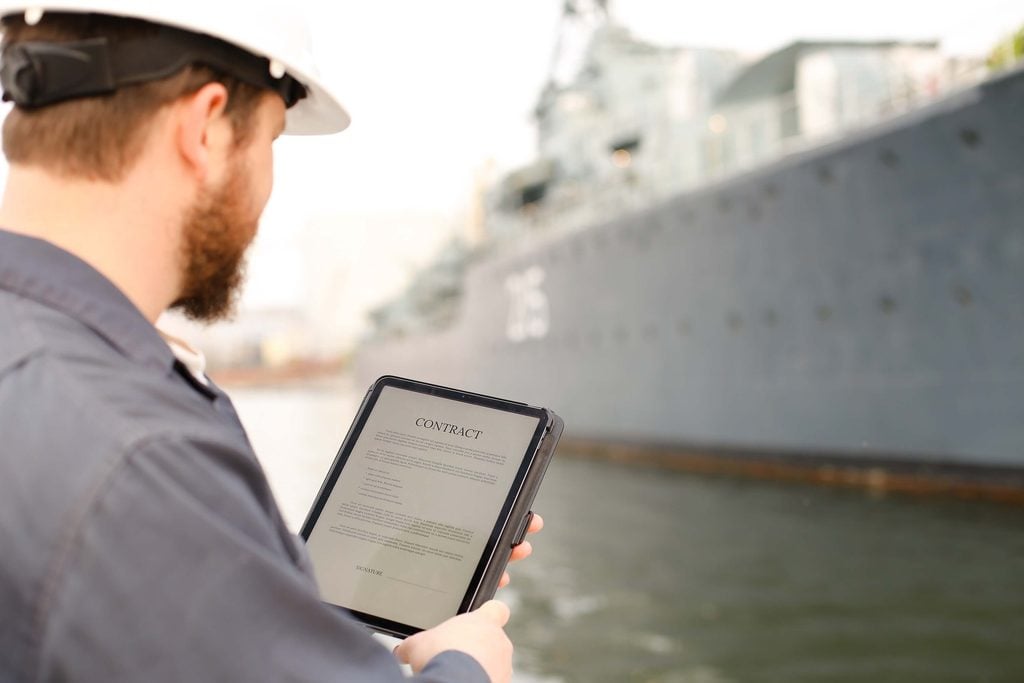
Free pratique becomes commercially important when a vessel is preparing to tender its Notice of Readiness.
An NOR is the formal notification that the vessel has arrived at the relevant location and is ready to load or discharge cargo, subject to the applicable charter party requirements.
A valid NOR is often one of the conditions governing when laytime can begin.
If free pratique remains outstanding, the effect on NOR validity depends on the charter party wording and the circumstances of the vessel’s arrival.
Can NOR Be Tendered Before Free Pratique Is Granted?
In some circumstances, yes.
Under English common law, the absence of free pratique does not automatically prevent a valid NOR.
This principle was addressed in The Delian Spirit [1972] 1 QB 103. The court recognized that an outstanding grant of free pratique would not necessarily invalidate NOR where there was no reason to expect the vessel’s health clearance to be refused.
The position may change when the vessel has a health issue or when the charter party contains specific conditions concerning free pratique.
Some charter parties contain the abbreviation WIFPON, meaning Whether in Free Pratique or Not.
This wording permits NOR to be tendered before free pratique is granted, subject to the other provisions of the charter party.
For ship agents and vessel operators, the exact contract wording matters. A clause allowing early tender of NOR may still operate alongside other conditions governing its validity.
What Is the Six-Hour Rule for Free Pratique?
Some tanker charter parties contain specific provisions concerning how soon free pratique must be obtained after NOR is tendered.
A well-known example is The Eagle Valencia, AET Inc v Arcadia Petroleum [2010] EWCA Civ 713.
The case concerned the Shellvoy 5 charter party. Under the relevant provisions, free pratique needed to be granted within six hours of tendering NOR. Because that requirement was not satisfied, the NOR was held invalid.
Similar timing provisions appear in BPVOY 4.
The practical consequence is significant. If an NOR is invalid, it may need to be tendered again once the relevant requirements have been satisfied. That can affect the calculation of when laytime begins.
The following table summarizes how different free pratique situations may affect NOR and laytime.
| Free pratique status | Potential effect on NOR | Potential effect on laytime |
|---|---|---|
| Granted by radio before arrival | Health clearance is satisfied, subject to other NOR conditions | Laytime begins according to the charter party |
| Pending, with WIFPON wording | NOR may be tendered before clearance | Depends on the full charter terms |
| Pending under a six-hour clause | NOR may become invalid if clearance is delayed beyond the specified period | A fresh NOR may be required, affecting commencement |
| Refused or vessel quarantined | Vessel readiness and NOR validity may be disputed | Laytime commencement may be delayed |
The distinction is particularly important when a vessel arrives on time, tenders NOR, and subsequently encounters a delay in obtaining health clearance.
A few hours between NOR tendering and the grant of free pratique may affect the laytime calculation, depending on the applicable contractual provisions. The agent therefore needs to record exactly when the authority granted free pratique and retain the confirmation.
What Happens if a Ship Agent Fails to Obtain Free Pratique?
Failure to apply for free pratique can have consequences beyond a delay to the vessel’s schedule.
In April 2018, the International Transport Intermediaries Club (ITIC) reported a case in Hong Kong where a ship agent faced criminal charges after failing to apply for free pratique.
The agent was handling a container ship that had arrived at Kwai Chung. The vessel came alongside without the required free pratique certificate, and a service engineer left the ship before clearance had been granted.
The issue caught up with the agent after the vessel had already sailed for Shanghai. Authorities issued a criminal summons because the vessel had failed to proceed to quarantine anchorage and someone had disembarked without permission from the health officer.
Under Hong Kong law, the agent was considered a responsible party. The agent pleaded guilty, explaining that the failure to apply had been an administrative oversight.
The fine itself was small, but the legal costs were considerably higher. ITIC ultimately reimbursed the agent, although the published case did not disclose the amounts.
It’s a useful example of how a missed pre-arrival requirement can become a liability issue for the agent, even after the vessel has left port. It also shows why agents need to confirm that free pratique has actually been granted and keep a record of the approval.
For more on the responsibilities agents take on during vessel calls, see our article on ship agent liability.
Why Should Agents Record Free Pratique in the Statement of Facts?
Once free pratique has been granted, the agent should retain the confirmation as part of the port call record.
The exact time of clearance can become important when the owner, charterer, or another party reviews the vessel’s arrival and cargo operations.
For example, consider a vessel that tenders NOR at 08:00 and receives free pratique at 15:00.
Those two timestamps may need to be examined against the charter party before the parties can determine whether the original NOR was valid and when laytime commenced.
A complete record should include:
- The time the vessel arrived at the relevant location.
- The time NOR was tendered.
- The time free pratique was granted.
- Any inspection or quarantine restrictions affecting the vessel.
- The time the vessel berthed and cargo operations commenced.
The agent should also retain supporting documents and correspondence confirming the reported events.
These details belong in the Statement of Facts, which records the vessel’s activities and important events throughout the port call. When questions arise over laytime or demurrage, the SOF provides a chronological record that can be reviewed alongside the charter party and other evidence.
Keeping the Port Call Record Together
For agents handling multiple vessels, these records can quickly become scattered across emails, port authority messages, and separate operational documents.
Port call management software such as Base gives agents a central location for maintaining operational records, documents, and timestamped port call events. The time free pratique was granted can be retained alongside other important events, including arrival, NOR tendering, and commencement of cargo operations.
Base also supports the preparation of a digital Statement of Facts, helping agents maintain a consistent record of the vessel’s activities. That documentation becomes valuable when the principal needs to verify what happened during the call or review the timing of a particular event.
Conclusion
Free pratique is a routine part of many international port calls, but the requirements deserve attention well before the vessel arrives.
Ship agents need to collect the master’s health declaration, confirm the port’s filing requirements, submit the necessary documents, and obtain confirmation from the health authority.
The exact time clearance is granted should be retained with the vessel’s other arrival records.
For owners and charterers, that information may become important when reviewing NOR validity, calculating laytime, or investigating a delay. Base’s port call software helps agents keep operational events, supporting documents, and the Statement of Facts connected to the vessel’s port call.
Frequently Asked Questions
What Does the Yellow Q Flag Mean on a Ship?
The yellow Quebec (Q) flag traditionally indicates that a vessel requests free pratique. It is commonly associated with the ship’s request for health clearance before entering port or beginning permitted activities. Flying the flag does not itself mean that the health authority has granted clearance.
Is Free Pratique the Same as Port Clearance?
No. Free pratique concerns public-health clearance and quarantine restrictions. Port clearance involves other requirements, including customs, immigration, security, and maritime documentation. A vessel may need several separate approvals before completing its arrival formalities.
Does Every Port Issue a Free Pratique Certificate?
No. Requirements vary by country and port. Some authorities issue formal certificates, while others communicate free pratique through electronic notifications or other accepted channels. Ship agents should confirm what constitutes official clearance at the destination port.
What Happens if a Crew Member Becomes Ill After the Health Declaration Is Submitted?
The master may need to report the change in health status to the relevant authority. Depending on local requirements and the nature of the illness, officials may request updated documentation, a medical assessment, or an inspection before granting free pratique.


