ETA is one of the most important reference points in logistics. That part is a no-brainer. Nearly every planning decision around a vessel, a terminal, or a downstream move starts with when the ship is expected to arrive.
What gets overlooked is how much work gets built around that estimate. Pilots, tugs, berth windows, customs submissions, warehouse labor, inland transport, and cost exposure all hinge on ETA. When it holds, things feel calm. When it shifts, the effects ripple quickly across teams that are rarely working from the same view.
Most ETA problems do not come from the estimate being wrong. They come from the estimate changing without the rest of the port call moving with it. Updates get forwarded, copied, re-entered, or quietly adjusted in one place but not another. By the time the mismatch becomes obvious, people are already reacting.
This is why ETA deserves more attention than a single timestamp. In shipping, ETA is not just a planning input. It is a coordination signal that shapes how controlled or chaotic a port call feels as it unfolds.
What is ETA in shipping?

ETA, or Estimated Time of Arrival, is the predicted time a vessel is expected to reach a defined point associated with a port call. That point might be a pilot station, anchorage, or berth, depending on the port and the activity being planned.
On paper, ETA looks simple. In practice, it carries different weight depending on who is relying on it.
Operations teams use ETA to line up pilots, tugs, linesmen, and berth readiness. Customs authorities rely on it to time inspections and port clearance windows. Warehouses and inland carriers use it to plan labor and equipment availability. Finance teams quietly use ETA as an early signal for when costs begin accruing.
What makes ETA challenging is not the estimate itself, but how many actions key off it. An ETA can shift services, paperwork timing, and cost exposure all at once.
Experienced agents understand this instinctively. That is why ETA works best when it is treated as part of the port call record, not as a single timestamp passed around in messages.
What Affects ETA?
ETA moves because shipping operates inside layered constraints that rarely align cleanly. Some of those forces are visible days in advance. Others appear with very little warning.
Understanding what drives ETA changes helps explain why disciplined handling matters more than perfect prediction. Here’s some of the most common things that affect estimated time:
External conditions and port dynamics
Weather remains one of the most common drivers of ETA movement. Heavy seas, adverse currents, restricted visibility, and seasonal systems regularly alter transit speed and pilot boarding windows. These shifts are routine, not exceptional.
Port congestion adds another layer. A vessel can arrive on its planned ETA and still wait offshore due to berth availability, labor limitations, or terminal sequencing decisions. From an operational standpoint, arrival without access still creates downstream pressure.
Tidal windows, daylight restrictions, and local traffic management rules further influence timing. These constraints vary by port and can change faster than formal schedules reflect.
Voyage level decisions
ETA is also shaped by decisions made earlier in the voyage. Late cargo readiness, extended time at the previous port, added bunkering, or unplanned crew movements all compress or expand the timeline.
In reality, these decisions are communicated across multiple channels. Emails, chat messages, and calls each carry part of the story. When ETA updates are not anchored to a single operational timeline, downstream teams end up working from partial context.
Regulatory and documentation timing
Many regulatory processes are tied directly to ETA. Pre-arrival notices, cargo declarations, and inspection scheduling all depend on accurate arrival estimates.
Customs and government authorities rely on submissions that reflect current timing. When ETA moves, but filings do not reflect that change, vessels can face holds or inspection delays that compound the original issue.
ETA in the shipping process movement itself is unavoidable. The operational risk comes from letting those movements happen without a traceable link to the rest of the call.
6 Best Practices for Vessel Agents and ETA

The agents who handle ETA best do not try to eliminate uncertainty. They accept that timing will move and focus on keeping the rest of the port call aligned as it does.
The practices below reflect how experienced agents reduce rework, misalignment, and downstream pressure when arrival timing shifts.
1. Treat ETA changes as operational events, not background updates
An ETA update should never exist on its own. It should be understood as an event that reshapes the call.
A weather-driven delay has different implications than congestion at the berth. A terminal reschedule affects a different set of services than a slow passage at sea. When ETA updates are shared without that context, teams are forced to interpret the change themselves.
That is when quiet mismatches appear. A pilot booking stays put when it should move. A vendor plans off an earlier message. Finance works from an outdated timeline. Treating ETA changes as operational events keeps those downstream decisions anchored to reality.
2. Anchor ETA inside the structure of the port call
ETA works best when it lives inside the same structure as the rest of the work. When agents rely on consistent port call templates, ETA becomes part of a repeatable operational framework rather than a number copied across emails, spreadsheets, and forms.
This structure makes it easier to see what else needs attention when timing moves. Services, documents, and submissions can be reviewed against the updated ETA instead of being chased one by one. The call stays coherent even as conditions shift.
This kind of structure also makes it easier for others to follow what is happening without asking for separate explanations.
3. Make ETA movement visible to both operations and finance
Arrival timing has financial consequences, whether or not they surface immediately. Delays can trigger standby, overtime, berth extensions, or revised pilotage charges.
When ETA updates live only in operational conversations, finance teams often see the impact after the call closes. At that point, costs have to be justified retroactively instead of being tracked as they arise.
Experienced agents keep ETA movement visible across teams so cost exposure remains connected to the events that caused it. That shared visibility reduces questions later and shortens post-call review.
4. Avoid running multiple versions of ETA in parallel
Most agents recognize this pattern, even if it is rarely discussed openly. Teams end up carrying several ETAs at once. The one they believe based on experience. The one sent externally to keep momentum. The one entered into a form because a time is required.
This is not carelessness. It is a coping response to fragmented systems that force commitment before the situation has settled.
The risk emerges when those parallel versions drift too far apart. Strong operators reduce that risk by keeping ETA changes visible and traceable instead of letting them live only in people’s heads.
5. Keep ETA tied to the work as it unfolds
The agents who experience the least friction are not the ones with perfect ETAs. They are the ones who keep ETA connected to services, documents, and costs as the call progresses.
When ETA moves, the work around it moves too. Nothing has to be reconstructed later. Nothing relies on memory or side explanations. The record reflects how the call actually unfolded.
This continuity becomes especially important once the call enters review, invoicing, or audit conversations.
6. Communicate ETA to clients as shared context, not isolated updates
Clients and shipping companies expect ETA updates, but what they value most is confidence that the situation is under control.
Sending revised times without context forces principals to interpret the change themselves. That often leads to follow-up questions, requests for reassurance, or parallel tracking on their side. The issue is not the update. It is the lack of surrounding visibility.
Experienced agents communicate ETA as part of a broader operational picture. What changed, what is already adjusted, and what remains on track. When clients can see that arrival timing, documentation, and cost implications remain aligned, ETA updates stop feeling reactive.
This is where having ETA embedded in the same record as the rest of the call matters. When updates, documents, and decisions live together, communication becomes clearer without needing longer explanations.
How Base Helps Port Calls Stay on Track
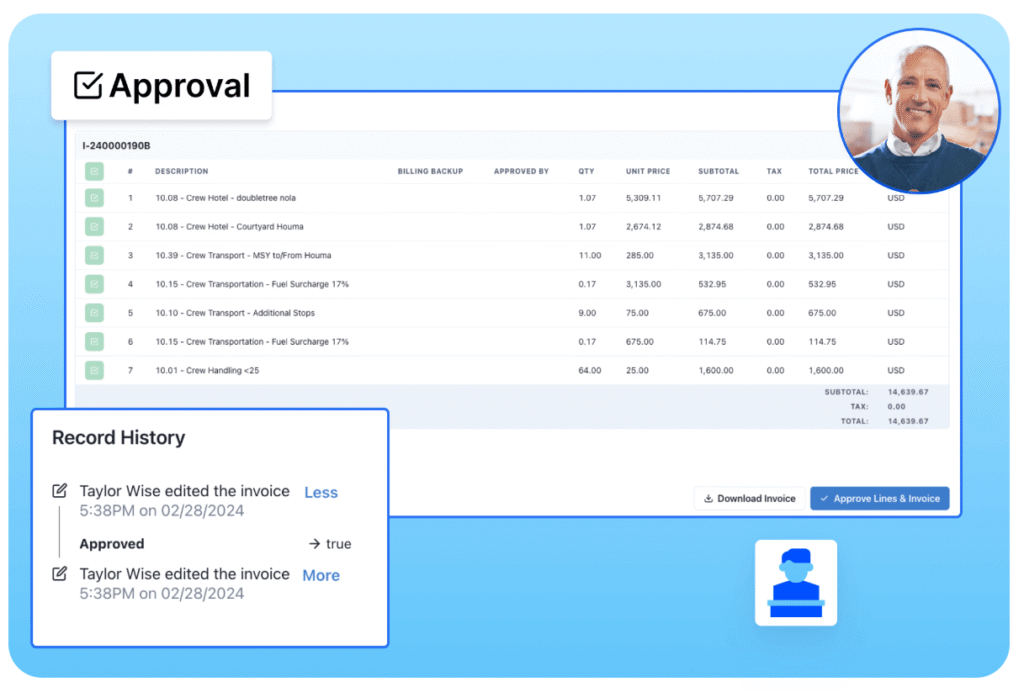
Base treats ETA as part of the port call record, not as a standalone field. Every ETA update lives inside the job timeline alongside the services, documents, and approvals it influences.
Each port call in Base maintains a continuous operational history. When ETA changes, related records stay attached to the same job. Port call documentation remains connected even as arrival timing shifts. Regulatory submissions reflect the latest known context. Service bookings and confirmations remain tied to the operational sequence.
This structure becomes especially valuable during the financial review. Costs that arise due to ETA movement do not need to be reconstructed from inboxes because the supporting documentation is already linked to the events that triggered them.
When ETA updates are captured as part of the job timeline, review conversations change. There is less backtracking. Fewer follow-ups that start with status checking. Discussions focus on what happened, not on whether the record can be trusted.
Base does not stop ETA from moving. It keeps ETA movement from creating confusion.
Final Take on ETA in Shipping

ETA will always move. That is simply part of operating in shipping. What determines how a port call actually runs is whether those changes stay connected to the work, the documents, and the costs that depend on them.
When ETA is treated as a shared operational signal rather than a loose timestamp, teams stay aligned even as conditions change. Services adjust with context. Financial exposure stays visible. Client communication feels grounded instead of reactive. The call reflects what actually happened, not a version rebuilt afterward.
That is the difference between managing arrival timing and constantly reacting to it.
If you want to see how Base keeps ETA updates tied to port call execution, documentation, and financial records as the work unfolds, get in touch with the Base team to walk through a real port call timeline.
Key Takeaways
- ETA is a central coordination signal in shipping, not just a planning reference. Nearly every operational, regulatory, and financial decision around a port call ties back to it.
- Most ETA issues stem from visibility gaps, not bad estimates. Problems arise when arrival timing changes without the rest of the port call adjusting alongside it.
- ETA movement affects more than operations. It influences customs timing, service readiness, cost exposure, client confidence, and post-call review.
- Vessel agents reduce friction by keeping ETA connected to the structure of the port call, including services, documents, and financial records.
- Clear ETA handling is a credibility marker. When updates carry context and stay traceable, client communication feels controlled rather than reactive.
- Systems that treat ETA as part of the job record make it easier to manage change without rebuilding the story after the call closes.
Frequently Asked Questions
How is estimated time of arrival different from actual time?
The estimated time of arrival reflects what is expected to happen, while the actual time records when the vessel’s arrival truly occurs. The key differences between ETA and actual time matter across logistics operations, especially when reviewing delivery times or resolving questions after the shipment reaches its final destination. Comparing estimated time against actual time also helps logistics companies evaluate ETA accuracy and understand how real world variables affected the voyage.
Why does ETA change so often during the shipping process?
ETA changes because the shipping process is influenced by many factors that evolve while a vessel is en route. Weather conditions such as rough seas, route changes, port congestion, and shifts in port operations can all affect arrival. Vessel speed adjustments tied to fuel consumption, delays at the origin port, or changes in estimated time of departure also play a significant role. These ETA changes are normal and reflect how dynamic logistics operations are in practice.
How do accurate ETAs impact the supply chain?
Accurate ETAs support better supply chain management by helping all parties involved plan with greater confidence. When logistics managers and port operators have accurate ETAs, they can allocate resources more effectively, plan storage space, and coordinate customs clearance with port authorities. Across the supply chain, accurate ETAs help minimize disruptions, support timely deliveries, and improve coordination between freight forwarders, terminals, and inland transport providers.
What role does ETA play in customs clearance and port operations?
ETA plays a central role in customs clearance and port operations because regulatory requirements are often tied to the expected arrival or expected date of a vessel. Customs authorities rely on the estimated time of arrival to schedule inspections and manage workload. When ETA shifts without being reflected in submissions, clearance can slow. Port operators also use ETA to manage berth assignments, labor planning, and other operations tied to the vessel’s arrival and departure.
How do logistics companies use ETA as a planning tool?
Logistics companies use ETA as a planning tool across the logistics chain to coordinate delivery, labor, equipment, and downstream transport. ETA informs delivery times, helps logistics managers plan other operations, and supports resource allocation across the supply chain. While ETA is never perfect, having a shared view of the predicted time allows teams to align expectations and manage delivery more effectively.
What is the relationship between ETA, ETD, and ATA?
ETA refers to the estimated time of arrival, while ETD is the estimated time of departure from the origin port. ATA meaning actual time of arrival, records when the vessel truly arrives. Together, these time markers help logistics operations track how a shipment moves from origin port to final destination. Comparing ETA, accurate ETD, and actual time helps teams understand where delays occurred and how delivery timelines were affected.
When a vessel reports an ETA to the pilot station, it is telling the port exactly when it expects to arrive at the point where the pilot boards. This is different from the ETA to the berth, which comes later. The pilot station ETA matters because pilotage must be booked in advance — most ports require 12 to 24 hours notice. If the vessel’s ETA to the pilot station shifts, the pilot booking shifts with it, which can cascade into berth availability changes, tug rescheduling, and cargo operation delays.