If you’ve reviewed a shipping or port invoice, you may have come across a line labeled “LOLO” and wondered what it meant. For shipping companies managing multiple cargo vessels, these LOLO charges can represent a measurable portion of total port-related fees. Understanding them is key to interpreting cost breakdowns accurately.
While LOLO might sound like a small operational detail, it represents a specific type of cargo handling that influences port logistics, vessel scheduling, and overall accountability. Knowing how LOLO charges work helps prevent disputes, supports accurate billing, and keeps shipment records clear across ports and carriers. Let’s unpack what these charges really cover and why they matter to daily operations.
What LOLO Means in Shipping
LOLO stands for Lift-On/Lift-Off, describing the handling of cargo that must be lifted onto or off a vessel using cranes rather than rolled on or off using wheeled equipment. This applies to containerized, breakbulk, and heavy cargo operations.
In practice, LOLO ships often use onboard cranes or external cranes to lift heavy containers and other types of freight that can’t move independently. These activities generate handling fees charged by the terminal operator or port authority, depending on the port’s rules. Some ports also include a small surcharge to cover a traffic mitigation fee, which accounts for temporary access restrictions during crane activity.
This definition ties closely to documentation. For instance, when comparing a Bill of Lading vs Packing List, LOLO operations are reflected as part of the shipment details that accompany cargo movement. That connection between paperwork and physical operation makes clarity around LOLO even more important.
How LOLO Charges Are Calculated
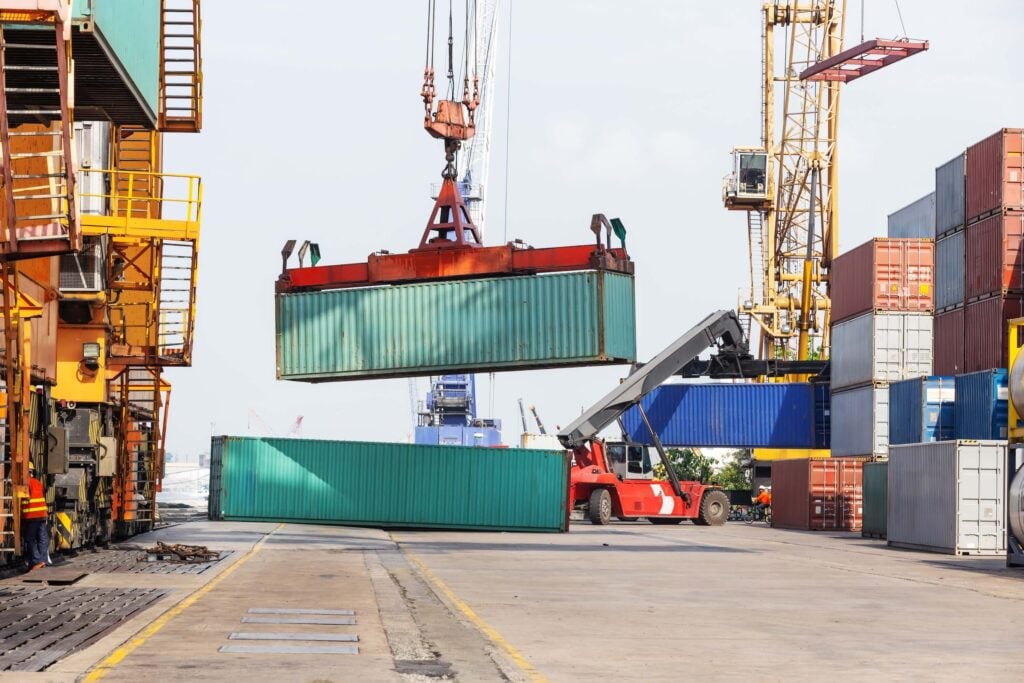
Once you know what LOLO means, the next logical step is to understand how the fees are determined. There’s no single formula, but most ports use a mix of three main factors when setting LOLO rates.
In practice, these are the key elements that shape the cost:
- Type of Cargo: Containers, heavy-lift items, or breakbulk cargo each require different handling methods, which means different rates.
- Equipment Used: Costs depend on whether onboard cranes or external cranes are used. A standard gantry crane costs less than a floating crane designed for oversized cargo.
- Time or Volume: Some ports charge per lift, while others charge by tonnage, weight, or operation duration.
Some ports apply a separate lift-off LOLO fee for heavy containers, while others include it under general cargo handling charges.
When cargo arrives, shipping lines and shippers must verify that each fee levied matches the applicable port tariff.
That complexity underscores why clear documentation and maritime automated invoice processing tools are becoming essential in modern shipping. When invoices automatically capture crane usage and operation time, finance teams can validate LOLO costs faster and with fewer discrepancies.
Common Issues with LOLO Billing
Knowing how LOLO fees are calculated helps explain why they often create confusion during reconciliation. These charges are typically grouped with stevedoring or port handling costs, which can make it hard to identify what each line item covers.
This lack of clarity leads to three recurring issues in billing:
- Duplicate Entries: LOLO costs might be billed twice if the same lift operation appears on multiple vendor invoices.
- Approval Delays: Missing or unclear descriptions make it difficult for finance teams to verify charges.
- Cost Misallocation: Without documentation showing which cargo the charge applies to, costs can be assigned to the wrong shipment or client.
These discrepancies often occur when shipment details or service categories are mislabeled across multiple port invoices. Automated solutions such as arrival notice OCR systems can extract port data accurately and match it with cargo manifests, reducing the need for manual cross-checks.
Issues like delayed approvals or demurrage penalties often appear as additional costs, especially when free time expires before unloading is complete. Clear documentation helps prevent these problems before they reach the billing stage.
That transparency becomes even more critical when multiple ports or cargo movements are involved, so let’s look at how LOLO fits into the broader shipping workflow.
Where LOLO Fits into Cargo Operations

After understanding the billing side, it’s useful to place LOLO in the context of daily cargo operations. In most shipping or logistics chains, LOLO services occur at one of three stages:
- At Loading Ports: When cranes lift cargo onto the vessel before departure.
- At Transshipment Ports: When cargo is temporarily discharged and reloaded during transfer.
- At Discharge Ports: When cranes lift cargo off the vessel at its destination.
Each event represents a distinct LOLO activity that can generate its own invoice. The party responsible for paying, often the vessel operator, charterer, or carrier, depends on contractual terms. Each cargo vessel may use onboard cranes for smaller lifts or rely on port-supplied external cranes for larger lolo ships handling various types of cargo.
When imported goods exceed weight limits, the carrier may also face surcharges tied to extended crane time or delayed loading. By mapping out where and when LOLO occurs in your operation, you gain a clearer view of total handling costs. This understanding also makes it easier to forecast expenses for future voyages using port cost estimation methods that account for lift-off operations.
Once you’ve identified where LOLO applies operationally, the next step is keeping track of those charges consistently.
Managing LOLO Costs Effectively
Because LOLO involves multiple handling points, cost management requires structure. The goal is to maintain a clear record that connects each charge to a specific cargo movement. Here’s a straightforward approach that logistics and vessel teams can apply:
- Record Each Lift: Note every lift-on and lift-off activity as it happens, linking it to a specific vessel call or cargo ID.
- Collect Source Documents: Keep port invoices, crane logs, and time sheets together as proof of service.
- Cross-Check Rates: Compare charges with port tariffs or terminal rate sheets to confirm accuracy.
- Categorize Costs: Classify LOLO fees under cargo handling or port operations for reporting clarity.
- Review Post-Voyage: Conduct a final check to reconcile all LOLO entries against actual operations.
Keeping detailed shipment records not only helps with billing but also supports future port cost estimation and business forecasting. Accurate tracking also prevents cancellation fees or other types of service disputes from affecting the final account reconciliation.
Once teams adopt a consistent tracking method, LOLO becomes a transparent cost line instead of a frequent billing question. With cost control in place, it’s worth looking at why accurate LOLO accounting benefits more than just the finance department.
Final Take on LOLO Charges in Shipping

LOLO charges may seem like a small technicality, but they represent a significant aspect of port cost management. Recognizing what they cover, how they’re billed, and where they appear across operations helps both shipping professionals and clients make sense of their invoices.
When handled with transparency and consistency, LOLO documentation strengthens financial control, builds trust, and keeps project records accurate from the first lift to the final lift-off.
For teams that manage complex port costs and vessel billing, tools like Base bring all those details together in one place. Base helps unify operational data, documentation, and approvals so that charges such as LOLO, demurrage, and other port fees are clear, verified, and ready for client review without the back-and-forth.
As ports and vessels continue to manage increasingly complex cargo movements, clarity around these operational costs (and the systems that track them) will remain essential for reliable shipping practices.
Key Takeaways
- LOLO (Lift-On/Lift-Off) refers to crane-based cargo handling at ports.
- Charges depend on cargo type, equipment used, and operation time or weight.
- LOLO costs can appear multiple times across a single voyage or project.
- Clear records and documentation prevent billing confusion and approval delays.
- Transparent LOLO accounting supports accurate budgets and client trust.
FAQs
What does LOLO mean in shipping?
LOLO stands for “Lift-On/Lift-Off.” It describes the process of loading or unloading cargo using cranes instead of wheeled vehicles or ramps.
How are LOLO charges calculated?
LOLO charges are typically based on the type of cargo, the equipment used, and the time or volume handled. Each port or terminal sets its own tariff rates for these services.
Why do LOLO fees vary between ports?
Different ports have unique infrastructure, labor costs, and operational methods. These factors influence the rates for crane usage and handling services.
Who pays LOLO charges?
The responsibility depends on the shipping contract. In many cases, the vessel operator, charterer, or cargo owner covers the LOLO costs as part of port operations.
How can I verify LOLO charges on my invoice?
Compare the listed LOLO items against your port call report or stevedore log. Make sure each lift operation is supported by documentation, such as a crane time sheet or service receipt.
How are empty containers handled when loading or unloading?
Empty containers are treated the same as loaded ones when handling cargo at the terminal. Once they’re moved on or off the vessel, the crew records their position on board to maintain accurate stowage data. This helps the customer track container movements and keeps all operations secure and well-documented. All container movements are subject to the same port regulations and safety standards as full loads.