For anyone managing international shipments to the United States, the Automated Manifest System (AMS) is one of those details that can quietly determine how smoothly cargo moves. It’s a small procedural step with large operational and financial consequences if handled incorrectly.
Across carriers, NVOCCs, and freight forwarders, one question keeps surfacing: who is responsible for AMS filing?
This question matters because it determines who carries liability if something goes wrong. A late or inaccurate AMS submission can delay vessels, trigger fines, or ripple through billing and cash flow. For operations and finance teams alike, knowing who owns this task keeps projects compliant, predictable, and on schedule.
Understanding What AMS Filing Is
AMS (Automated Manifest System) is a digital reporting platform managed by U.S. Customs and Border Protection (CBP). Its purpose is to give customs visibility into what is entering U.S. ports before the cargo departs its origin.
For ocean freight, carriers or their agents must electronically submit shipment information at least 24 hours before loading. The data they will input includes:
- Shipper and consignee details
- Bill of lading (B/L) numbers
- Cargo description and quantity
- Vessel name, voyage number, and load port
This system helps CBP screen cargo in advance, reducing risk at the border. Failure to file on time or to file accurately can lead to penalties and shipment holds.
The Three Primary Parties in AMS Filing

In practice, three main entities may be involved in AMS filing, each with distinct responsibilities and varying degrees of accountability:
1. The Ocean Carrier
The ocean carrier, as the vessel-operating entity, is legally obligated to submit AMS data for all cargo under its cargo manifests. Carriers must file at least 24 hours before loading at the origin port.
If the carrier files AMS on behalf of third parties such as freight forwarders or NVOCCs, it assumes legal responsibility for accuracy and timeliness. Errors in a carrier’s filing can cause customs delays that affect all shipments aboard the vessel.
2. The NVOCC
A Non-Vessel Operating Common Carrier (NVOCC) issues its own house bills of lading but does not operate vessels. If bonded and approved by CBP with a filer code, an NVOCC must file AMS for the house bills it issues.
In this case, both the NVOCC and the carrier submit separate filings. One is for house-level data, the other for master-level data. If the NVOCC does not have a filer code, it must rely on the carrier to file on its behalf.
3. The Freight Forwarder
Freight forwarders generally prepare shipment documentation but do not file AMS directly unless they are also licensed as bonded NVOCCs. Their role is to ensure that the filing party, whether carrier or NVOCC, receives accurate data and required documents in time.
When these roles aren’t clearly defined during booking, accountability gaps appear that later show up in billing or customs delays.
Why AMS Responsibility Often Gets Confused
Even experienced logistics professionals run into ambiguity about AMS responsibilities. The root cause lies in the difference between legal responsibility and operational execution.
Legally, CBP holds the carrier or bonded NVOCC accountable. Operationally, multiple parties share data that must align perfectly before the filing occurs.
Here are the three main reasons confusion arises:
- Multiple Documentation Sources: When shippers, forwarders, and agents create separate sets of documents for the same shipment, details can conflict.
- Sub-Agent Dependencies: Vessel agents or charterers may assume the other party is filing, leaving the task unclaimed.
- Complex Supply Chains: In project logistics or EPC work, several intermediaries may be involved, making it unclear who holds the active filer code.
When these gaps occur, the filing party risks penalties, while others experience project and payment delays. That operational risk becomes financial very quickly.
The Link Between AMS Filing and Billing Accuracy

AMS filing might look like a compliance task, but its effects reach deep into billing. Every AMS submission produces shipment data that forms the basis for documentation like manifests and Proforma Disbursement Accounts (PDAs).
If the filing is late or inaccurate, billing teams can’t finalize invoices or reconcile costs until customs data matches financial records. This delay disrupts invoicing schedules and slows down reimbursements.
That connection between customs data and billing accuracy often surprises operations teams. But for finance teams, it’s a familiar pain point. The longer the gap between shipment and invoice approval, the greater the pressure on cashf low.
Clarity around AMS responsibility keeps both compliance and billing workflows running predictably.
How to Structure AMS Accountability Internally
Successful logistics organizations don’t leave AMS filing up to assumption. They build structured workflows that document who files, when, and with what data.
Here’s a simple framework many operators follow:
- Confirm the Filing Party: Identify at booking who will file AMS (carrier or NVOCC) and verify they hold a valid bond and filer code.
- Set Internal Deadlines: Create internal documentation cutoffs that fall before CBP’s 24-hour pre-load rule.
- Centralize Documentation: Store commercial invoices, packing lists, and bills of lading in one shared location.
- Cross-Check Accuracy: Verify that shipment details match between commercial documents and the ACE Manifests data transmitted to CBP.
- Confirm Receipt: Always obtain CBP confirmation that the AMS filing was accepted.
This structured approach eliminates guesswork and strengthens compliance records. It also gives both operations and finance teams shared visibility into shipment status.
When AMS workflows are documented, teams can focus on performance instead of chasing missing filings. That operational discipline has tangible financial value.
The Financial and Operational Impact of Getting It Right
Clear AMS accountability reduces customs penalties and improves cargo flow, but it also creates measurable financial benefits. When the filing process is handled consistently, data flows cleanly from operations to billing systems.
The impact shows up in several ways:
- Reduced Client Disputes: Accurate filings mean accurate manifests and fewer billing mismatches.
- Faster Payment Cycles: Verified shipment data supports quicker invoice approvals.
- Lower Administrative Cost: Teams spend less time resolving discrepancies.
- Improved Credibility: Clients and partners see reliability not just in service, but in documentation.
Each of these benefits compounds over time, turning compliance accuracy into a competitive advantage.
How Base Helps Manage AMS Accountability and Billing Accuracy
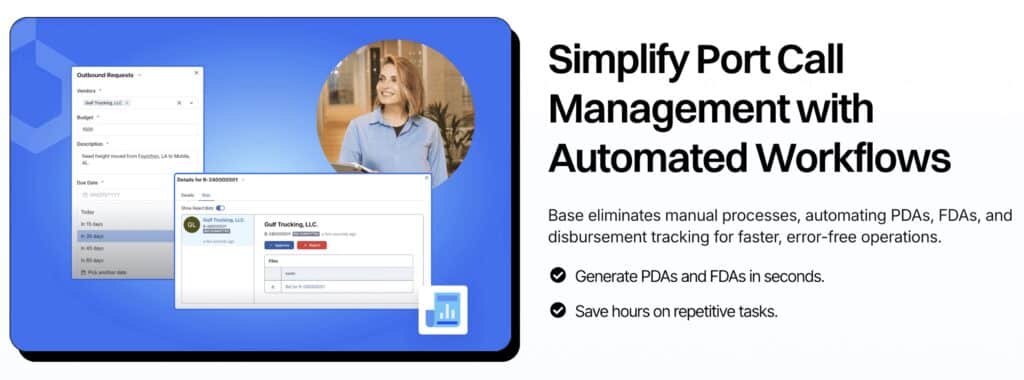
AMS filing may be a customs function, but its effects reach deep into financial operations. Base, a project billing management platform built for offshore energy, EPC, maritime, and project logistics providers, helps teams close the loop between compliance and billing.
With Base, operations and finance teams can:
- Centralize documentation: Store AMS records, manifests, and PDAs in one searchable workspace.
- Connect operations and finance: Sync shipment details with project financials to keep billing accurate.
- Improve visibility: Track project costs in real time so both internal teams and clients see the same data.
- Reduce manual re-entry: Link customs and billing information directly, lowering the risk of human error.
The result is greater transparency across departments and faster approvals on client invoices. When every AMS record aligns with billing data, accountability becomes part of everyday workflow, not a last-minute scramble.
Conclusion: AMS Filing Responsibility and Operational Discipline
Responsibility for AMS filing ultimately rests with the carrier or bonded NVOCC, but accountability extends to everyone who handles shipment data. Clear communication, accurate documentation, and structured workflows prevent costly confusion.
When teams understand where AMS responsibility lies and connect that process to billing systems, compliance becomes a foundation for financial accuracy. That discipline protects margins, improves client trust, and keeps projects moving without administrative friction.
Clarity at the start of each voyage sets the tone for how smoothly everything that follows will run.
Key Takeaways
- The carrier or bonded NVOCC holds legal responsibility for AMS filing.
- Freight forwarders play a key supporting role in data accuracy.
- Confusion stems from unclear booking terms and document overlaps.
- AMS data directly impacts billing, cash flow, and client approvals.
- A defined accountability framework prevents both customs and payment delays.
FAQs
Who is legally responsible for AMS filing?
The vessel-operating carrier or a bonded NVOCC with a CBP filer code is legally responsible for submitting AMS data at least 24 hours before loading at the foreign port. Their filing must comply with U.S. customs regulations and include accurate details to prevent delays during customs clearance.
Can freight forwarders file AMS directly?
Freight forwarders may only handle AMS if they operate as bonded NVOCCs with access to the AMS system. In all other cases, their role is to support the AMS filing process by providing complete and accurate shipment information to the carrier or NVOCC in charge of submission.
What happens if AMS filing is late?
Late AMS filing can lead to penalties and shipment holds because the automated commercial environment requires timely transmission of data to U.S. Customs and Border Protection. Delays at this stage can cascade into scheduling issues, cost overruns, and extended clearance times.
Does AMS filing apply to all shipment types?
Yes, AMS requirements apply to cargo entering or transiting the United States, including air cargo shipments that must follow similar data-reporting standards. Both ocean and air carriers must align their manifest data with customs systems before departure.
How does AMS filing connect to broader compliance measures?
AMS data complements the importer security filing program by providing cargo visibility earlier in the transport chain. Together, these filings strengthen cargo security, reduce compliance risks, and help keep the flow of goods predictable under evolving trade regulations.
How does AMS filing help prevent security issues?
By submitting detailed shipment information in advance, the AMS platform allows authorities to identify potential security threats before cargo arrives in U.S. ports. This proactive review process helps customs officials target high-risk shipments and maintain safer, more efficient trade operations.
How does AMS filing apply to air shipments?
For air freight, the air AMS process requires carriers or their agents to transmit detailed shipment data to U.S. customs authorities before the aircraft departs. This document submitted electronically provides visibility into incoming cargo, helping officials screen shipments early and prevent delays on arrival.