Shipping documentation is one of those things everyone relies on, but no one really wants to deal with. It sits in the background of every port call, moving alongside operations, shaping what can and can’t happen next.
In international logistics, documents aren’t just records. They’re what allow cargo to move across borders, clear customs, and transfer between parties without friction. When everything lines up, the process feels steady. When it doesn’t, you start seeing delays, extra checks, and long email threads trying to figure out where things went off.
This guide walks through how the shipping documentation process actually plays out, what documents matter most, and where things tend to get messy.
Important Shipping Documents You’ll See at Every Port Call
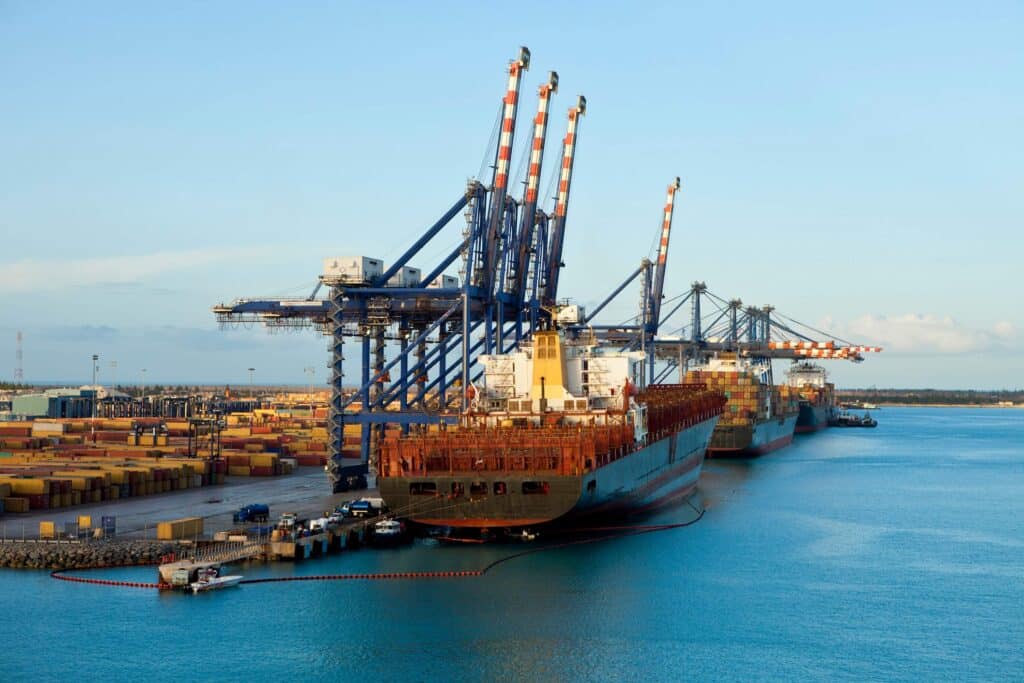
International shipments rely on a core set of documents that move alongside the cargo from origin to destination. Each one plays a specific role in clearance, transport, and handoff between parties, and together they form the foundation of the shipping process.
Before getting into how documentation flows across a port call, it helps to understand the key documents that show up in almost every international shipment:
Bill of Lading (B/L)
The bill of lading is one of the most referenced documents in international shipping. It acts as a receipt for the cargo, a contract for transport, and a document tied to ownership.
Because of how many roles it plays, even small errors can slow things down. Names, quantities, and cargo descriptions need to match supporting documents exactly. If they don’t, cargo release can stall while everything gets sorted out.
If you want a closer look at how it works in practice, this guide to the bill of lading breaks it down in more detail.
Packing List
The packing list provides a detailed breakdown of what’s inside each shipment. It includes quantities, weights, dimensions, and how the cargo is packaged.
Customs officials and handlers rely on this document to verify the contents of the shipment. It also helps resolve discrepancies if the cargo is inspected or partially unloaded.
Commercial Invoice
The commercial invoice is one of the most important documents in international logistics. It outlines the transaction between buyer and seller, including the description of goods, declared value, and terms of sale.
Customs authorities use this document to assess duties and taxes, so the details need to be precise. Any mismatch between the invoice and supporting documents can trigger delays or additional review.
Cargo Manifest
The cargo manifest gives a full snapshot of what’s on board the vessel. Customs authorities use it to review incoming or outgoing shipments and confirm that everything aligns with what’s been declared.
It needs to match the individual bills of lading. When there’s a mismatch, it usually leads to questions or inspections that slow the process down. Teams often check the cargo manifest early to confirm everything is consistent before arrival.
Certificate of Origin
The certificate of origin confirms where the goods were produced or manufactured. This document is often required to determine whether shipments qualify for preferential tariff rates under trade agreements.
Accuracy here matters because it directly affects how goods are taxed at the destination.
Customs Declaration / Export Declaration
Customs declarations are required for goods entering or leaving a country. They provide authorities with key information about the shipment, including value, classification, and purpose.
These declarations must align with other documents such as the commercial invoice and classification codes. Many teams reference tools like the Schedule B classification system and relevant customs rulings to support accurate reporting.
Insurance Certificate
The insurance certificate confirms that the cargo is covered against loss or damage during transit. While it’s not always required for clearance, it plays a key role in protecting financial interests if something goes wrong.
Licenses, Permits, and Special Declarations
Certain shipments require additional documentation depending on the type of goods. This can include import or export licenses, permits for regulated items, or dangerous goods declarations for hazardous materials.
These documents are tied closely to compliance requirements. Frameworks like maritime compliance help shape how these requirements are handled across different jurisdictions.
All of these documents work together. When the information stays consistent across them, shipments move through customs and ports without unnecessary interruptions. When details don’t align, issues tend to show up quickly in the form of delays, fines, or additional inspections.
What the Documentation Process Flow Looks Like in Practice

The documentation process doesn’t follow a clean step-by-step path. It moves in stages, with updates happening throughout the lifecycle of the shipment.
Different teams contribute at different points, which means information is constantly being passed along, updated, and checked. Breaking it into stages helps make sense of where things happen and where issues tend to show up.
Pre-Arrival Preparation
This is where everything starts to take shape. Core shipment documents like the commercial invoice, packing list, and customs declaration are prepared and submitted ahead of arrival.
Alongside these, port clearance documents are filed with local authorities so they can review whether the vessel is cleared to enter port. This is also when classification details are finalized using references like Schedule B or supporting rulings.
For import shipments, customs often receives advance data at this stage, which allows them to begin early review before the vessel arrives.
If something is incomplete here, it tends to carry forward and show up later under tighter timelines.
In-Transit Updates and Adjustments
Once the vessel is underway, documentation doesn’t stay static. Updates continue as cargo details are refined or instructions change between parties.
This is where documents like the bill of lading, cargo manifest, and packing list may be updated to reflect the latest information. Even small changes, like quantities or consignee details, need to be carried across documents to keep everything aligned.
The focus here is keeping consistency across the full document set as updates come in.
Port Arrival and Active Coordination
As the vessel approaches port, documentation moves into active review. Authorities begin checking submitted records and flagging any gaps.
This is where customs declarations, commercial invoices, and certificates of origin are reviewed more closely to determine whether cargo can be cleared. If something doesn’t line up, the shipment may be held for clarification or inspection.
At the same time, port clearance documents are either confirmed or revisited before the vessel proceeds. If approvals are already in place, operations move forward. If not, time is spent resolving outstanding issues.
Berthing, inspections, and cargo handling all depend on these documents being accepted at this stage.
Cargo Handling and Verification
During cargo operations, documentation is validated against what’s physically happening. The packing list and cargo manifest are used to confirm quantities, structure, and contents during handling or inspection.
If discrepancies show up, they are recorded and reflected in the documentation. This keeps records aligned with actual cargo conditions before final reporting.
Post-Departure Finalization
After the vessel departs, the focus shifts to closing everything out. Documents like the bill of lading, customs declarations, and supporting records are reviewed and finalized.
This is also when documentation is prepared for compliance, reporting, and billing, using the final version of what occurred during the port call.
If earlier stages were handled cleanly, this step moves quickly. If not, teams often need to go back through records to resolve gaps before everything is finalized.
Common Mistakes to Avoid During the Shipping Documentation Process
Shipping documents moves through a lot of hands. Vessel agents coordinate submissions, customs brokers handle filings, freight forwarders manage shipment details, and carriers issue transport documents. Each group is responsible for a different part of the process, and they’re often working on the same information at different times.
Because of that, most issues show up during handoffs. Information gets updated in one place but not another, or one team is waiting on details that haven’t been finalized yet. These gaps tend to surface later, usually when timelines are tighter and more people are involved.
Here are some of the most common mistakes that come up across teams:
- Working from multiple versions of the same document: It’s common for different parties to hold their own copies. An agent may update shipment details while a forwarder is still referencing an earlier version. That mismatch can spread across other documents before anyone catches it.
- Incomplete or unclear cargo descriptions: Shippers or exporters sometimes provide descriptions that are too general. Customs brokers and agents then have to clarify details during review, which slows things down and can trigger additional checks.
- Incorrect classification or regulatory references: Classification is usually handled by a specific team or specialist. If those details aren’t shared clearly, declarations can be filed using the wrong information, which leads to rework during review.
- Late submissions to authorities: Documentation often depends on inputs from multiple parties. When one step is delayed, it affects the timing of submissions to customs or port authorities.
- Breakdowns in communication between stakeholders: Updates don’t always reach everyone at the same time. A carrier, agent, and broker may each be working from slightly different information, which shows up in the documents they handle.
- Manual data entry across multiple systems: The same shipment details are often entered by different teams into different systems. Small differences in how that information is entered can create inconsistencies that need to be corrected later.
- Scattered document storage across inboxes and folders: Documents are frequently shared through email chains. When something needs to be reviewed or verified, teams spend time tracking down the most recent version.
- Not aligning documents with actual operations: During cargo handling, updates from the ground don’t always make it into the documentation right away. That gap shows up during final review and reconciliation.
These issues tend to build across the process rather than appearing all at once. Keeping documentation visible and connected across teams makes it easier to manage updates as they happen.
How Base Helps Keep Shipping Documentation Under Control
Shipping documentation doesn’t usually break because people don’t know what to do. It breaks when information is scattered, updated in different places, and passed between teams without a clear thread. That’s where things slow down, and that’s where most of the rework comes from.
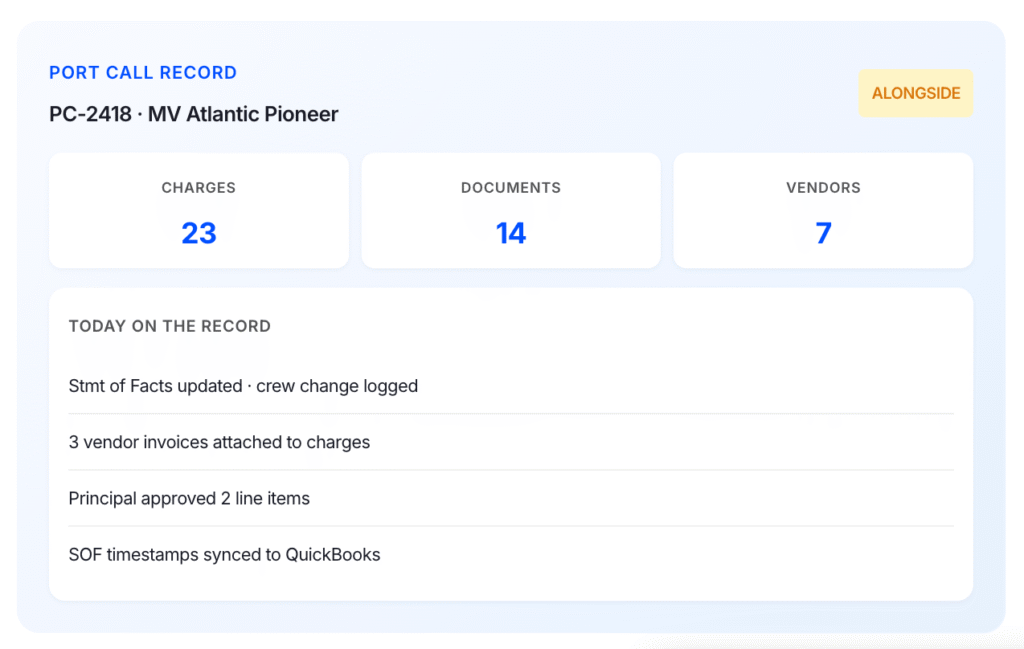
Base keeps documentation tied to the job it belongs to, so every document, update, and supporting detail lives in the same place from start to finish.
One place for every document tied to the shipment
Instead of documents living across inboxes, folders, and separate systems, everything sits inside the job timeline. Commercial invoices, bills of lading, packing lists, customs filings, and supporting documents are all attached directly to the shipment.
That makes it easier to see what’s been submitted, what’s still pending, and what’s been updated, without having to track it down across threads.
Real-time updates without version confusion
When a document changes, that update is reflected in one place. Teams aren’t working off separate copies or trying to confirm which version is correct.
Agents, brokers, and operators all see the same information at the same time, which reduces the back-and-forth that usually happens during handoffs.
Clear coordination across teams
Documentation doesn’t sit with one role, and Base reflects that. Each party involved in the shipment can work from the same record while only seeing what’s relevant to them.
That keeps communication tied to the work itself instead of spread across emails and chats, and it gives everyone a clear view of what’s been done and what still needs attention.
Built-in structure for compliance and reporting
Documents aren’t just stored, they’re organized in a way that supports compliance and reporting. Supporting files, classifications, and declarations stay connected, which makes it easier to prepare final documentation without going back through old messages.
When it’s time to finalize records or respond to a request from customs or a client, everything is already in place.
Less time spent reconstructing what happened
At the end of a shipment, teams often need to review what was submitted, when it was submitted, and how it changed over time. With Base, that history is already tied to the job.
Instead of piecing together emails and files, teams can follow the timeline and see how documentation moved from start to finish.
Shipping documentation doesn’t get simpler as shipments scale. More cargo, more ports, and more stakeholders all add complexity. Keeping everything connected to a single workflow is what allows teams to handle that complexity without losing track of the details.
Conclusion on the Shipping Documentation Process
Shipping documentation is tied to every stage of a port call. It reflects what’s happening in real time and supports everything from clearance to billing.
In international logistics, that connection becomes more visible because multiple countries and authorities are involved. Each document needs to hold up across those different checkpoints.
This is where having everything connected in one place makes a difference. With Base, documentation stays tied to the job it belongs to, so updates, records, and supporting details move together instead of getting scattered.
The work itself stays the same, but it becomes easier to manage when everything is aligned from the start.
Key Takeaways
- Documentation supports every stage of international shipping
- Core documents need to stay aligned across stakeholders
- The process moves in stages with ongoing updates
- Early accuracy helps avoid delays later
- Most issues come from how information is handled
- Keeping everything connected makes the process easier to manage
Frequently Asked Questions
What are the most important documents involved in an export shipment?
For any export shipment, the core set of international shipping documents includes the commercial invoice, packing list, and transport documents like an ocean bill or air waybill. In many cases, a proforma invoice is issued earlier in the export transaction to outline expected costs, followed by a final commercial invoice that confirms the actual terms. Each legal document in this set carries important details that customs and carriers rely on to move goods across borders.
How does customs clearance work in international logistics?
The customs clearance process involves reviewing shipment data, verifying declared value, and confirming regulatory compliance before cargo is released into the importing country or destination country. Authorities check documents against customs regulations, and any gaps can lead to customs delays. This process is central to border protection, ensuring goods entering a country meet all regulatory requirements.
What is electronic export information and when is it required?
Electronic export information (EEI) is a filing required for certain exports to report shipment details to the government. This is done through the automated export system, and filing electronic export information is required for shipments above specific value thresholds or for controlled goods. These filings support foreign trade regulations and help monitor international trade activity for compliance and reporting.
What role does the packing list play in shipping?
An export packing list is a detailed document that outlines the contents, weight, and packaging of a shipment. It provides detailed information used during inspections and cargo handling. It also helps ensure proper documentation across all records, especially when multiple packages or containers are involved in a single shipment.
Who is responsible for preparing shipping documentation?
Shipping documentation is handled by several relevant parties, including the exporter, freight forwarder, customs broker, and carrier. The exporter may provide a shipper’s letter of instruction, including special handling instructions, while brokers manage filings and permits like import permits. Some shipments also require emergency response information for hazardous goods. Coordination between all parties is what keeps documentation aligned.
How are shipping documents managed today compared to older processes?
Many teams are moving away from paper based processes and adopting digital workflows using electronic data interchange and electronic signatures. This allows documents to move faster between systems and stakeholders, supporting timely delivery. It also helps track key performance indicators tied to documentation speed and accuracy, especially when compared to domestic shipping, where requirements are typically simpler.