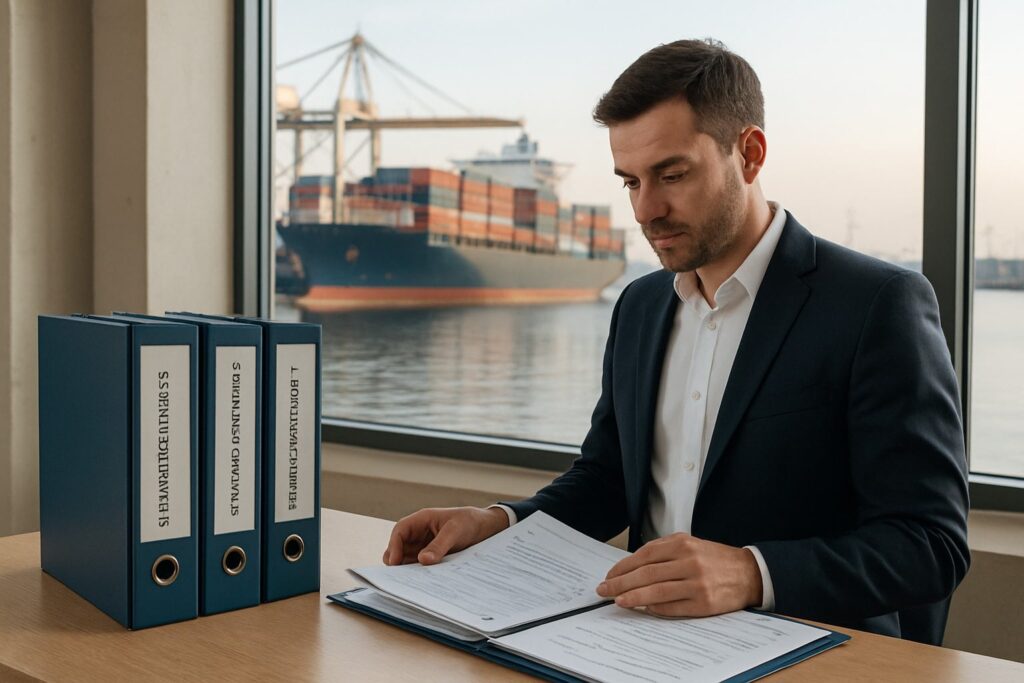
A Port State Control officer boards at 0800. The inspection checklist covers MARPOL Annex VI sulphur documentation, SOLAS fire safety certificates, and crew certification under STCW. You’re the vessel agent. The paperwork coordination is yours.
If you’ve been through that call, or you’re working to make sure every call goes cleanly, the International Maritime Organization is the body whose rules govern every document on that list. Knowing what it does, which conventions apply at the berth, and who actually enforces them is not a compliance theory exercise. It is the operational baseline for every port call you manage.
The International Maritime Organization (IMO) is the United Nations specialized agency responsible for setting global standards for the safety, security, and environmental performance of international shipping. It was established in 1948 and currently has 175 member states. The IMO does not operate vessels, inspect ships, or issue certificates. It writes the conventions. Flag states and port state control authorities carry them out.
This guide covers the three IMO conventions that appear on every port call you handle, how flag state and port state control divide the enforcement burden, and what compliant documentation looks like from the agent’s side of the operation.
What the International Maritime Organization Actually Does
The IMO’s primary output is conventions: binding international agreements that member states ratify and translate into national law. The conventions establish minimum standards across vessel safety, crew qualifications, pollution prevention, and maritime security. Member states that ratify a convention are obligated to apply its standards to vessels flying their flag.
Three committees sit at the core of IMO’s technical work: the Maritime Safety Committee (MSC), which handles SOLAS and related safety instruments; the Marine Environment Protection Committee (MEPC), which administers MARPOL and environmental standards; and the Legal Committee, which addresses liability and compensation frameworks.
The structural point that matters for your work is this: the IMO sets the standard, flag states pass it into national law, and port state control officers enforce it at the berth. These are three separate entities with three separate functions. The convention text lives with the IMO. A vessel’s certificates are issued by the flag state administration or a recognized classification society acting on its behalf. The inspection that determines whether those certificates are valid and current happens when a port state control officer boards.
This separation has a direct operational consequence. When an inspector finds a deficiency, the flag state carries the compliance obligation. You, as the agent, carry the coordination burden. You are the first call when documentation is incomplete, when a corrective action needs to be arranged, or when a detention needs to be managed at the berth. Understanding who owns what in the IMO framework keeps you from absorbing responsibility that belongs elsewhere.
The 3 IMO Conventions That Show Up on Every Port Call
IMO has produced dozens of conventions and codes since 1948, but three appear consistently on the compliance checklist for a standard commercial port call. Each one maps to a specific set of certificates, records, and operational requirements that you need to know exist and verify are current before the vessel arrives.
SOLAS: Safety of Life at Sea
The International Convention for the Safety of Life at Sea is the foundational IMO safety instrument. First adopted in 1914 following the Titanic disaster and substantially revised in 1974, SOLAS sets minimum standards for vessel construction, fire protection systems, lifesaving appliances, navigation equipment, and radio communications.
For port agents and ops leads, SOLAS compliance is most visible through two channels. First, the vessel’s certificates: the Cargo Ship Safety Equipment Certificate, the Cargo Ship Safety Radio Certificate, and the Cargo Ship Safety Construction Certificate must be valid, on board, and available for inspection. Expired or missing certificates are among the most common triggers for PSC detentions.
Second, SOLAS Chapter IX incorporates the International Safety Management (ISM) Code, which requires every vessel to have a documented Safety Management System (SMS) in place. The Document of Compliance (DOC) held by the company and the Safety Management Certificate (SMC) held by the vessel are the documentary proof of ISM compliance. PSC inspectors check both. A vessel arriving without a current SMC is a detention risk. Build certificate expiry dates into your pre-arrival checklist as a standard line item.
MARPOL: Marine Pollution Prevention
The International Convention for the Prevention of Pollution from Ships governs what vessels can discharge and emit during operations. MARPOL is structured into six annexes:
- Annex I: Oil pollution (bilge water, tanker discharges)
- Annex II: Noxious liquid substances in bulk
- Annex III: Harmful substances in packaged form
- Annex IV: Sewage
- Annex V: Garbage
- Annex VI: Air pollution, including sulphur oxide and nitrogen oxide emissions
Annex VI generates the most documentation work at a port call following the IMO 2020 sulphur cap, which limited sulphur content in marine fuel to 0.50% globally and 0.10% in Emission Control Areas (ECAs). Vessels must carry a Bunker Delivery Note (BDN) for every fuel delivery, documenting the sulphur content of the fuel received. The Oil Record Book (ORB) documents all oil-related operations and must be available for PSC inspection.
If your vessel operates in an ECA (the North Sea, Baltic Sea, North American coast, or US Caribbean), the sulphur documentation requirements are tighter and inspection focus is correspondingly higher. Missing or incomplete BDNs are a direct path to deficiency notices.
STCW: Crew Certification Standards
The International Convention on Standards of Training, Certification and Watchkeeping for Seafarers establishes minimum qualification standards for the officers and crew operating international vessels. It covers watchkeeping duties, safety training, firefighting, medical first aid, and proficiency requirements by rank and vessel type.
For ops leads and vessel agents, STCW surfaces in one specific scenario: a PSC inspector checks crew certificates and finds them expired, incorrectly endorsed, or missing for the vessel type. STCW deficiencies do not belong to the agent; the vessel operator and flag state are responsible for crew certification. But when the inspector flags a deficiency, you manage the immediate response at the berth: communication with the owner, the flag state administration, and port authority officials.
Knowing that STCW exists and what it covers means you are not caught off guard when a crew certificate becomes the subject of a PSC inspection. It also means you can ask the right question in your pre-arrival communication with the master.
Flag State vs. Port State Control: Who Owns the Risk
The compliance framework for international shipping runs on two parallel enforcement tracks. Understanding how they differ determines who you call when something goes wrong and who bears the burden when an inspector is not satisfied.
1. Who registers the vessel. The flag state is the country where the vessel is officially registered. When a ship flies a particular flag, it operates under that country’s maritime laws, which must in turn meet IMO convention standards. Major flag states include Panama, Liberia, Marshall Islands, Bahamas, and Singapore. Each has a maritime administration that issues vessel certificates or delegates that authority to a recognized classification society.
**2. Who issues the certificates. The flag state administration, or its recognized organization, issues all the statutory certificates a vessel carries: SOLAS certificates, MARPOL compliance documentation, the vessel’s Safety Management Certificate. When certificates expire or are found deficient, the flag state administration is the body responsible for addressing them.
3. Who inspects in port. Port state control is the authority of the coastal country to inspect foreign-flagged vessels operating in its waters or calling its ports. Regional PSC regimes include the Paris MoU (Europe and North Atlantic), Tokyo MoU (Asia-Pacific), and the US Coast Guard (United States ports). These coordinate inspection criteria and share detention data across member states. A vessel detained in Rotterdam under Paris MoU standards will have that record visible to Tokyo MoU inspectors on its next call in Asia.
4. Who detains the vessel. PSC inspectors have the authority to detain a vessel if deficiencies are serious enough to pose a risk to crew safety, the environment, or vessel seaworthiness. The flag state cannot override a port state detention. The vessel stays until the deficiencies are corrected to the satisfaction of the inspecting authority.
5. Who the agent calls first. When a PSC inspection is in progress or deficiencies are identified, your first call is to the vessel owner or manager and the P&I club. The flag state administration may also need to be contacted if certificates are at issue. The port authority handles berthing logistics but does not carry inspection authority under the IMO framework. Knowing this sequence prevents delay when the timeline is tight.
What IMO Compliance Looks Like During a Port Call
IMO compliance is not an abstract regulatory obligation. It is a set of specific documents, certificates, and records that need to be in the right place at the right time across three phases of a port call.
Pre-Arrival: What to Verify Before the Vessel Arrives
The window between receiving a vessel nomination and its arrival is the right time to verify the compliance picture. At minimum, your pre-arrival checklist should confirm:
- Certificate of Class: Issued by the classification society; must be current and unencumbered.
- SOLAS certificates include Cargo Ship Safety Equipment, Safety Radio, and Safety Construction. Verify expiry dates against the ETA.
- SMC and DOC: Safety Management Certificate (vessel) and Document of Compliance (company); both must be current.
- ISPS: International Ship and Port Facility Security Code certification must be valid; verify last audit date.
- MARPOL Annex VI documentation: Confirm BDNs are on board for recent fuel deliveries; confirm ECA compliance if applicable.
- Crew certification status: Ask the master to confirm STCW certificate currency for key officers.
A gap in any of these is easier to resolve before arrival than when the inspector is at the gangway. The practical standard: if you cannot confirm a certificate is current before the vessel arrives, flag it to the owner immediately and document that communication with a timestamp.
During the Call: What PSC Inspectors Focus On
Not every vessel is inspected on every call. PSC regimes use a risk-based targeting system. Factors that increase inspection probability include the vessel’s flag state performance on the Paris or Tokyo MoU white/grey/black list, prior detention history, vessel age, cargo type, and the time elapsed since the last inspection. (For more on this, see our Get Your Free Maritime Cost Analysis:.)
When an inspection is triggered, inspectors typically review: certificate validity and authenticity, ISM Code compliance (SMC, DOC, and the SMS itself), MARPOL records (ORB, BDNs, garbage management plan), ISPS compliance (Ship Security Plan, recent drill records), STCW crew certificates, the minimum safe manning document versus actual crew on board, and navigation and radio equipment condition.
Your role during an inspection is coordination, not compliance defense. The master and officers answer the inspector’s questions. You manage communication with the owner, arrange any rectification work if deficiencies are found, and document every action with timestamps. If a detention is issued, engage a P&I club surveyor immediately.
Post-Call: Closing the Compliance Record
The Statement of Facts (SOF) is the timestamped record of a port call: arrival, berthing, operations start and end, departure. For a port call that involved a PSC inspection, the SOF should also capture the inspection start time, deficiencies found (if any), corrective actions completed, and clearance time.
If deficiencies were identified and rectified, the corrective action record needs to be retained. PSC regimes track detention history across calls and regions. A clean, documented response to a deficiency is worth more than a verbal assurance that the inspection went fine. If the record does not support it, the assurance counts for nothing.
Frequently Asked Questions
What is the International Maritime Organization?
The International Maritime Organization (IMO) is the United Nations specialized agency responsible for the safety, security, and environmental regulation of international shipping. Founded in 1948 and headquartered in London, the IMO develops binding conventions that member states ratify and apply through national legislation. It does not directly operate vessels, issue certificates, or conduct inspections.
What is the difference between MARPOL and SOLAS?
SOLAS (Safety of Life at Sea) governs vessel safety: construction standards, fire systems, lifesaving equipment, navigation, and the ISM Code. MARPOL (Marine Pollution Prevention) governs what vessels can emit and discharge, including oil, garbage, sewage, and air pollutants such as sulphur oxides. Both are IMO conventions, but they address different risks and require different on-board documentation.
What is port state control and how does it affect port agents?
Port state control is the authority of a coastal country to inspect foreign-flagged vessels in its ports to verify compliance with IMO conventions. For port agents, PSC is most relevant when an inspection is triggered during a port call. The agent does not answer the inspector directly but coordinates with the vessel owner, P&I club, and port authority when deficiencies are found. All communications must be timestamped and documented.
What does flag state mean in shipping?
A vessel’s flag state is the country where it is registered and under whose laws it operates. The flag state maritime administration is responsible for ensuring the vessel meets IMO convention standards and for issuing (or delegating the issuance of) its statutory certificates. Flag state performance is tracked by port state control regimes and affects the probability that a vessel will be targeted for inspection in foreign ports.
What is the ISM Code?
The International Safety Management Code is incorporated into SOLAS Chapter IX. It requires every shipping company and vessel to maintain a documented Safety Management System (SMS) covering safety and pollution prevention procedures. The company holds a Document of Compliance (DOC) and each vessel holds a Safety Management Certificate (SMC). Both are checked during PSC inspections.
Where to Focus Your Compliance Effort First
Three conventions generate most of the compliance workload on a standard commercial port call: SOLAS, MARPOL, and STCW. Of the three, SOLAS certificate validity and MARPOL Annex VI documentation are the highest-frequency PSC deficiency triggers. Start there.
The practical priority stack:
- Verify certificate expiry dates at nomination. Build this into your pre-arrival workflow. Expired certificates are preventable.
- Confirm BDNs and ORB are current at last port. A 30-second question to the master before arrival saves a deficiency notice during inspection.
- Know your vessel’s flag state PSC standing. Black and grey list flag states receive increased PSC scrutiny. This data is publicly available through Paris and Tokyo MoU.
- Document everything with timestamps. Pre-arrival communications, inspection coordination, corrective actions. The SOF and the communication trail are your only protection if liability is disputed after the call.
When a port call has structured records (timestamped events, verified certificates, clean pre-arrival confirmations), it looks different to an inspector and to a principal reviewing your work afterward. Compliance is not a separate function from operations. It is what good operations leave behind.
If you want to see how Base structures port call compliance records so that pre-arrival checks, inspection coordination, and post-call documentation run from one job thread rather than across email and spreadsheets, book a strategy call with our team.