You’re juggling a lot as a ship agent.
One eye on the vessel schedule, another on vendor confirmations. Emails coming in from the principal, updates from the terminal, last-minute changes to ETAs, and documents that still need to go out. At any given moment, there are multiple moving parts that all need to stay aligned.
And somewhere in the middle of it, there’s a quieter question that doesn’t always get said out loud:
If something goes wrong, where does the responsibility land?
It’s not always obvious in the moment. A delay here, a missed update there… most issues don’t feel like major risks when they happen. But once costs, claims, or disputes enter the picture, that’s when liability becomes real.
In this blog, we’ll break down what ship agent liability actually means, where it tends to come from in day-to-day operations, and what you can do to stay in control when things don’t go exactly as planned.
What a Ship Agent Is Responsible For (In Practice)

To understand liability, you first have to understand the scope of the role, not in theory, but in how it actually plays out during a live port call.
A ship agent sits at the center of the operation, keeping multiple threads moving at the same time. The responsibility is broad as well as interconnected. What happens in one area almost always affects another.
In practice, that responsibility typically includes:
- Coordinating vessel movements: Managing arrival, departure, berth scheduling, and service timing across pilots, tugs, and terminals
- Handling documentation and compliance: Preparing and submitting pre-arrival documents, crew lists, manifests, port call reports, and port-specific requirements
- Managing communication across stakeholders: Acting as the link between principals, port authorities, vendors, and internal teams
- Overseeing financial flow: Tracking disbursements, managing vendor costs, and preparing the PDA and FDA
Because so much of this work happens before the vessel even arrives, pre-arrival planning plays a big role in how smoothly the call runs. Many agents rely on a structured approach like a port call planning checklist to keep timing, documentation, and service coordination aligned from the start.
Each of these areas carries its own pressure, but the real complexity comes from how tightly they connect. A delay in documentation can affect clearance. A missed update can throw off vendor timing. A financial gap can slow down approval at the end of the call.
That’s the key point to keep in mind: liability doesn’t sit in one responsibility. It follows how well these moving parts stay aligned.
What “Ship Agent Liability” Actually Means
It’s easy to think of liability as something that only comes up in extreme situations. In reality, it’s tied closely to the day-to-day work of managing a port call.
At its core, ship agent liability comes down to responsibility for errors, omissions, or negligence while handling the vessel’s operations. That can include something as simple as passing along incorrect port information or as serious as mishandling cargo or documentation.
Where it becomes more complex is how far that responsibility can extend.
In many jurisdictions, agents can be held jointly responsible alongside the ship owner or charterer. This means a claim doesn’t have to work its way up the chain, but instead it can be brought directly against the agent. That exposure can cover port charges, cargo-related issues, customs penalties, and even fines tied to environmental or regulatory matters.
Some of the most common areas where liability shows up include:
- Operational errors: Providing incorrect instructions, misdirecting cargo, quoting the wrong rates, or failing to coordinate equipment properly
- Documentary failures: Mistakes in bills of lading or shipping documents (like incorrect weights or seal numbers) which can lead to delays, fines, or vendor disputes
- Statutory and port-related obligations: Responsibility for port dues, customs duties, crew repatriation, or penalties tied to non-compliance
- Cargo handling issues: Releasing cargo without the correct documentation, improper storage, or incorrect handling of sensitive cargo like reefers
- Financial handling: Poor management of disbursement funds or lack of clarity around how money was handled during the call
Alongside all of this sits a fiduciary responsibility. Agents are expected to act in the principal’s interest at all times, handling funds carefully, following instructions closely, and avoiding decisions that could create conflicts.
Contracts and standard trading conditions can help define limits, but they don’t remove responsibility entirely. If something is handled poorly, those protections don’t always hold up.
The important thing to understand is that liability isn’t a separate layer sitting outside the work. It’s built into how the work is done across operations, documentation, and financial handling… and it tends to surface when something in that chain breaks down.
How a Ship Agent Is Found Liable

When something goes wrong during a port call, liability isn’t assigned immediately. It’s worked through step by step, usually starting with a simple question: what caused the issue?
From there, the focus shifts to whether the agent played a role in that outcome, and if so, how.
The first thing that gets established is duty of care. As an agent, you’re expected to act with reasonable skill and diligence on behalf of the principal. That standard applies across everything you handle, including operations, documentation, communication, and financial management.
Once that duty is clear, the next step is looking at what actually happened:
- Was there an error in how instructions were passed along?
- Were documents submitted incorrectly or too late?
- Was cargo released without the proper checks in place?
- Did the agent provide inaccurate information about the vessel, cargo, or port?
This is where negligence comes into play. The question isn’t whether something went wrong. It’s whether the agent’s actions fell below what would be considered reasonable in that situation.
At the same time, authority is reviewed.
Agents are expected to act within the scope given by the principal. If decisions were made outside that scope like approving services without confirmation, mismanaging funds, or acting on incomplete instructions, that can shift responsibility directly onto the agent. The agency agreement and any standard trading conditions are usually examined here to understand what was authorized and what protections were in place.
Local laws and port regulations also factor in.
In some jurisdictions, agents carry direct responsibility for certain obligations, especially around customs, cargo handling, and port-related charges. In those cases, liability can apply even if the issue wasn’t entirely within the agent’s control.
From there, everything comes back to causation.
It’s not enough to show that a mistake happened. There needs to be a clear link between the agent’s actions and the outcome, whether that’s a financial loss, a delay, or a regulatory penalty. That link is built using documentation: emails, timestamps, service confirmations, invoices, and submitted forms.
If that chain is clear, responsibility is easier to assign. If it isn’t, the situation becomes harder to defend.
In many cases, insurers are brought into the process as well, particularly where errors and omissions coverage applies. But even then, the outcome still depends on how clearly the situation can be traced.
What this process shows is that liability isn’t determined by one moment. It’s built from how the entire call was handled: what decisions were made, how they were communicated, and whether they stayed within the expected standard of care.
7 Ways to Protect Yourself as a Ship Agent

Once you understand how liability is assessed, the next question becomes practical: how do you reduce your exposure while still keeping the operation moving?
There’s no way to remove risk from port operations. Too many variables sit outside your control. What you can control is how clearly the work is handled and how well each step is supported if it’s ever questioned.
That starts with how information is managed during the call:
1. Keep a Clear, Continuous Record of the Operation
Every port call moves quickly, and details change often. ETA updates, vendor confirmations, service adjustments. These moments matter more than they seem at the time.
Capturing those updates as they happen creates a running timeline of the call. That timeline becomes your reference point when questions come up later. Without it, you’re left piecing things together from memory or scattered messages, which is where gaps start to show.
A clear record doesn’t just help with organization. It also gives you something concrete to stand on.
2. Work Within Confirmed Authority at All Times
One of the most common ways exposure builds is through decisions made on assumptions.
Before approving a service, confirming a cost, or changing instructions, there should be clarity on what’s been authorized. That doesn’t mean slowing everything down, but rather it means making sure there’s a record of the decision.
When authority is clear and documented, it’s much easier to explain why something was done. When it isn’t, responsibility tends to shift back to the agent.
3. Be Precise With Documentation
Documentation is one of the areas where small mistakes carry outsized consequences.
Incorrect weights, wrong seal numbers, or incomplete forms can lead to delays, fines, or disputes that take time to unwind. These errors often come from speed or repetition, not complexity.
Taking an extra moment to verify key details, especially in bills of lading, manifests, and regulatory documents, reduces the risk of those issues surfacing later, when they’re harder to fix. This is so important, especially when you are handling multiple port calls at once.
4. Control How Vendors Are Instructed and Confirmed
Vendors rely on the information they’re given. If that information is unclear, outdated, or incomplete, the outcome reflects it.
Clear scopes of work, written confirmations, and consistent communication create alignment before the service even begins. It also creates a record of what was requested and agreed to.
When something doesn’t go as expected, that record becomes the difference between a quick resolution and a drawn-out dispute.
5. Track Financials as the Call Progresses
Financial clarity is much easier to maintain in real time than it is to rebuild later.
Recording costs as they happen alongside invoices, confirmations, and agreed rates, keeps everything aligned. Waiting until the end of the call to reconcile expenses often leads to missing details or unclear charges.
When each line item is already supported, the FDA process becomes more straightforward, and fewer questions come up during review.
6. Keep Internal and External Communication Separate
Not every conversation needs to be shared externally.
Internal coordination often includes back-and-forth, quick decisions, and partial information. What principals and stakeholders need is a clear, structured view of what’s happening.
Keeping those layers separate helps avoid confusion and keeps communication focused. It also makes it easier to present a consistent version of events when updates are reviewed later.
7. Use Contracts, but Don’t Rely on Them Alone
Contracts and standard trading conditions help define expectations, but they don’t replace how the work is carried out.
If something is handled poorly, contractual protections don’t always prevent exposure—especially in cases involving negligence or regulatory obligations.
They should be part of your approach, not the fallback. Day-to-day execution and clear documentation are what carry the most weight when situations are examined closely.
Taken together, these practices do one thing well: they make your work easier to stand behind.
Because when something is questioned (and it will be) the advantage doesn’t come from avoiding every issue. It comes from being able to show, clearly and confidently, how the situation was handled from start to finish.
Conclusion: Ship Agent Liability
The reality of ship agency work is that things won’t always go to plan.
Schedules shift. Vendors miss timing. Information arrives late or changes at the last minute. That’s part of the job. What separates a manageable situation from a difficult one is how clearly everything around that situation is handled.
When details are scattered across emails, spreadsheets, and disconnected systems, even well-run calls become harder to explain. Questions take longer to answer. Disputes take longer to resolve. And more of that pressure ends up sitting with the agent.
When the operation is structured… when updates, communication, documents, and financials are all tied together… the dynamic changes. You’re not searching for answers or rebuilding the timeline. You can see exactly what happened, when it happened, and how it was handled.
That’s where tools like Base are so important.
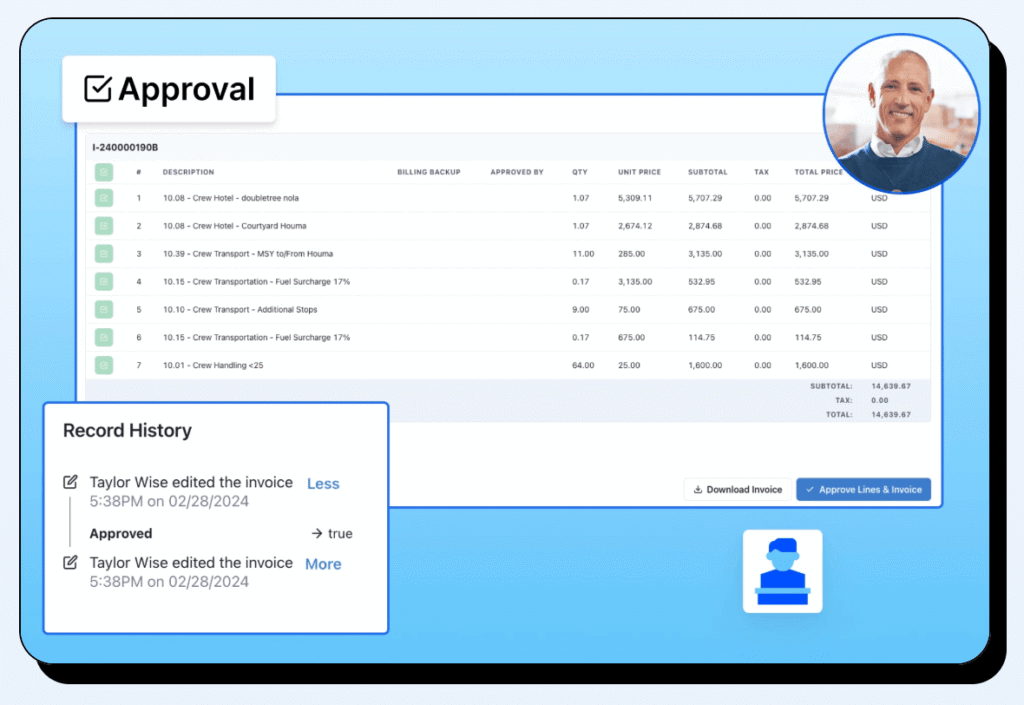
Base gives ship agents a single place to manage the full port call, from operational updates and vendor coordination to documentation and financial tracking. Instead of piecing together information across multiple tools, everything lives within the same workflow, connected to the same job.
The result is simple: clearer visibility, faster responses, and fewer gaps when something is questioned.
Because in the end, you can’t remove risk from port operations. But you can control how well your work holds up when it matters.
Key Takeaways
- Ship agent liability comes from day-to-day execution: small gaps in coordination, documentation, or communication can lead to real exposure.
- Agents can be held directly responsible in some cases, including port charges, documentation errors, cargo issues, and regulatory penalties.
- Liability is typically assessed based on duty of care, whether the agent acted within authority, and whether their actions caused the issue.
- The most common risks come from operational misalignment, documentation mistakes, vendor coordination, and unclear financial records.
- Clear, connected records across operations, communication, and financials make it much easier to explain what happened and reduce exposure.
Frequently Asked Questions
What is the liability of a shipowner?
A shipowner carries primary responsibility within the shipping business for the vessel, its operation, and anything that happens under its control.
This includes liability for cargo, crew safety, and any damage to property caused during an incident, such as a collision or pollution event. Shipowners are also expected to operate in accordance with international and local regulations, which vary depending on the country where the vessel is operating.
Financial exposure can be significant, which is why shipowners rely heavily on marine insurance. This helps cover risks tied to cargo claims, environmental damage, and third-party losses. In some cases, disputes over liability may escalate through the legal system and even reach a high court or appeal process.
In practical terms, the shipowner is the central person or entity responsible for the vessel, even when other parties are involved in operations.
What are the liabilities of an agent?
A shipping agent’s liability is tied to how they act as a representative of the principal during a port call.
Agents can be held responsible if they fail to carry out their duties with reasonable care. This includes errors in documentation, miscommunication, or operational mistakes—such as handling dangerous goods incorrectly, misdirecting cargo, or failing to pass along critical instructions.
They may also face exposure if they act outside their authority, mishandle funds, or fail to properly deal with vendor coordination. In certain countries, agents can be directly liable for port charges, customs issues, or regulatory penalties.
If a mistake leads to financial loss, the agent may be required to pay damages or compensation, depending on the circumstances and contractual terms. Many agents are insured for errors and omissions, but that coverage depends on how the situation is handled.
At a basic level, agent liability comes down to whether they fulfilled their role with the expected level of care and within the scope they were given.
What are the responsibilities of a shipping agent?
A shipping agent is responsible for managing the port call on behalf of the vessel’s operator, acting as the local point of coordination for the entire operation.
This includes arranging vessel services, handling documentation, and supporting activities like crew changes, while staying in close contact with terminals, vendors, and authorities. The agent also manages communication between stakeholders and may work alongside a chartering broker depending on the structure of the operation.
On the financial side, the agent tracks costs, prepares disbursement accounts, and helps maintain security over how funds are handled. They may also coordinate with the shipping company’s internal teams and oversee tasks carried out by local employees.
In every aspect of the role, the agent is expected to act with professionalism and in the best respect of the principal’s interests.
In short, the agent keeps the operation moving while making sure each part of the port call is handled properly from start to finish.