There’s a moment in every port call where you can feel the day split into two tracks.
In one track, the plan holds. ETAs line up. Services arrive in the right window. Paperwork lands where it should. The master isn’t calling twice an hour. Your vendor relationships stay calm. Finance isn’t already bracing for a backup hunt.
In the other track, reality shows up with muddy boots. A berth window shifts. A tug gets reassigned. The terminal changes the sequence. Customs wants a different format. Someone forwards an “FYI” that should have been a red flag three hours ago.
Exception management is how experienced port teams keep that second track from turning into a pileup. It’s the discipline of catching deviations early, getting the right people aligned fast, documenting what changed (and why), and closing the loop so the same category of surprise doesn’t keep landing on your desk.
In this blog, we’ll put clean language around what exception management actually is, what usually triggers exceptions in port work, what a real process looks like, and how Base supports it when the pace picks up.
What is Exception Management?
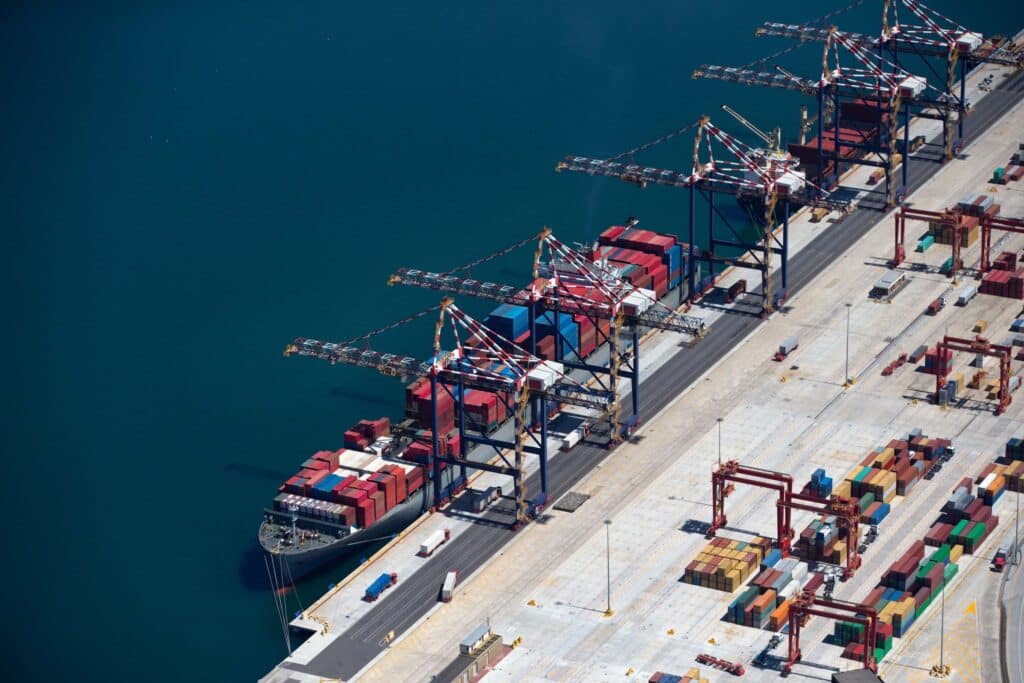
Exception management is the practice of identifying, tracking, prioritizing, and resolving anything that deviates from the expected plan for a port call, all while keeping a defensible record of what happened.
In port work, an “exception” is rarely theoretical. It’s tangible and time-bound: a shift in arrival, a service that can’t meet the requested window, a document mismatch, a vendor rate dispute, a compliance requirement that surfaces late, a cost line that doesn’t match the backup. It’s the stuff that drags you away from planned coordination and into reactive coordination.
A useful way to think about it: a port call has a “normal operating rhythm.” The moment that rhythm is broken, someone is forced to make a decision with imperfect information. Exception management is how you stop those decisions from living in scattered messages, half-updated spreadsheets, and memory.
In mature teams, exception management also includes a learning loop. If the same port, terminal, service, or document type keeps generating the same kind of deviation, the team doesn’t just survive it—they start naming it, tagging it, and building it into how they plan future calls.
That’s where this becomes more than “handling problems.” It becomes operational control: a repeatable way to keep the call truthful, even when it’s changing by the hour.
You’ll see this discipline show up most clearly in high-variability work—think customized port calls where the same vessel can require a different playbook each time because cargo, terminal constraints, principal expectations, and local realities never sit still.
And when exception management is done well, something subtle happens: fewer people feel the need to chase you for updates, because the update trail is clear, current, and tied to the work itself, not trapped in one person’s phone.
What are Some Common Causes of Exception in Port Operations?

Most exceptions in port operations come from the reality that port calls sit at the intersection of too many parties, too many dependencies, and too many moving clocks.
Here are common triggers we see repeatedly in the day-to-day grind:
- ETA drift and knock-on timing conflicts: A small ETA change can cascade into missed pilot windows, tug rescheduling, launch timing, berth window pressure, and crew logistics conflicts. The operational “plan” becomes a series of quick edits that need to stay consistent across parties.
- Terminal or berth changes: A shift in berth assignment, cargo sequence, or terminal availability can force rework across services, documentation, and approvals. And delays in awaiting anchorage are shockingly common nowadays. If that change isn’t captured cleanly, teams end up working two versions of reality at once.
- Vendor constraints and service availability: Pilotage, tugs, linesmen, launch boats, waste, freshwater, chandlers—each has constraints and priorities. An exception shows up when the vendor can’t meet the planned window, or when terms and scope aren’t aligned.
- Documentation version issues: The wrong crew list, an outdated certificate, a missing permit, a form in the wrong format—these are quiet exceptions that turn loud right before arrival. They also tend to create compliance exposure, not just delay.
- Compliance and inspection surprises: Sometimes it’s a port-side requirement. Sometimes it’s a vessel-side readiness issue. Either way, inspections and compliance needs create exceptions because they demand proof, timing, and coordination under scrutiny. Flag-side compliance can drive its own category of exceptions—especially when an inspection is pending, scheduled, or triggered—which is why many ops teams keep a close eye on flag state inspections as part of readiness planning.
- Approval ambiguity: “Approved” in a thread doesn’t always mean approved in a way finance can defend later. Exceptions show up when services are ordered without a clear sign-off trail, or when principals dispute a cost because the supporting record is thin.
- Cost capture gaps: The work happens fast. Receipts arrive slow. If charges, proof, and context aren’t captured close to real time, the exception gets deferred to the worst possible moment: PDA/FDA reconciliation.
- Handoffs and time-zone gaps: Port work rarely respects office hours. Exceptions often land during handoffs, when someone is trying to make a call based on partial context.
These causes sit inside the broader ecosystem of port operations, where the real challenge isn’t knowing what “should” happen, it’s keeping the moving parts consistent when what “should” happen shifts.
If you look at that list and think, “Yes, that’s just Tuesday,” you’re exactly the audience for a real exception process. The goal isn’t to pretend exceptions go away, but rather to handle them in a way that keeps control and preserves proof.
What is the Exception Management Process?

A process that works in port operations has to respect two truths: exceptions arrive mid-motion, and the record matters almost as much as the resolution.
Here’s a practical exception management flow that matches how real teams operate. We’ll lay it out as steps because this is one place where structure helps:
- Detect the deviation early (and name it clearly): “ETA changed” isn’t enough. You want: what changed, compared to what baseline, and what it impacts. Naming the exception well saves time later.
- Classify it by type and risk: Timing exception? Vendor exception? Documentation exception? Compliance exception? Cost/approval exception? Classification matters because it tells you who needs to be pulled in and how urgent it is.
- Assign an owner and freeze the current truth: Someone owns the exception. Meanwhile, the team needs a single current version of reality: latest ETA, latest service windows, latest document set, latest approvals.
- Coordinate the fix across parties: This is where most teams bleed time. Calls, emails, messages, screenshots. The fix itself is often straightforward; the coordination is the hard part. Strong port call coordination is basically “exception management in motion,” where the timeline stays accurate while dependencies shift.
- Document what changed and why (in the job record): What was the decision? Who approved? What evidence supports it? What was the timestamp? This is the difference between a clean closeout and a future argument.
- Verify downstream alignment: The exception isn’t “resolved” when you make a decision. It’s resolved when the right parties are working from the same updated truth: vendors, terminal contacts, principal stakeholders, internal ops, and finance.
- Close the loop after the call: This is the most skipped step. After departure, you tag the exception category, capture root cause notes, and decide whether it should change the template or checklist for next time.
To make this feel less abstract, here’s what the same process looks like in practice, broken into the phases teams actually talk about:
Pre-arrival exceptions
These tend to be documentation, readiness, and timing issues: forms, certificates, berth windows, customs constraints, early arrivals, shifting instructions. The best teams treat pre-arrival as a readiness gate, not a loose collection of emails.
In-port exceptions
These are live coordination issues: service timing, terminal sequence changes, weather disruptions, crew logistics, vendor availability, unplanned requests, cargo delays. The resolution often depends on how quickly the timeline can be updated and shared.
Closeout exceptions
These are money-and-proof issues: missing receipts, disputed lines, unclear approvals, currency issues, supporting docs that don’t match, or costs that weren’t captured in context.
If your process feels heavy, it won’t survive contact with reality. If it’s too loose, you’ll win the call and lose the closeout. The sweet spot is a light structure that produces a strong record.
How Base Helps with Exception Management
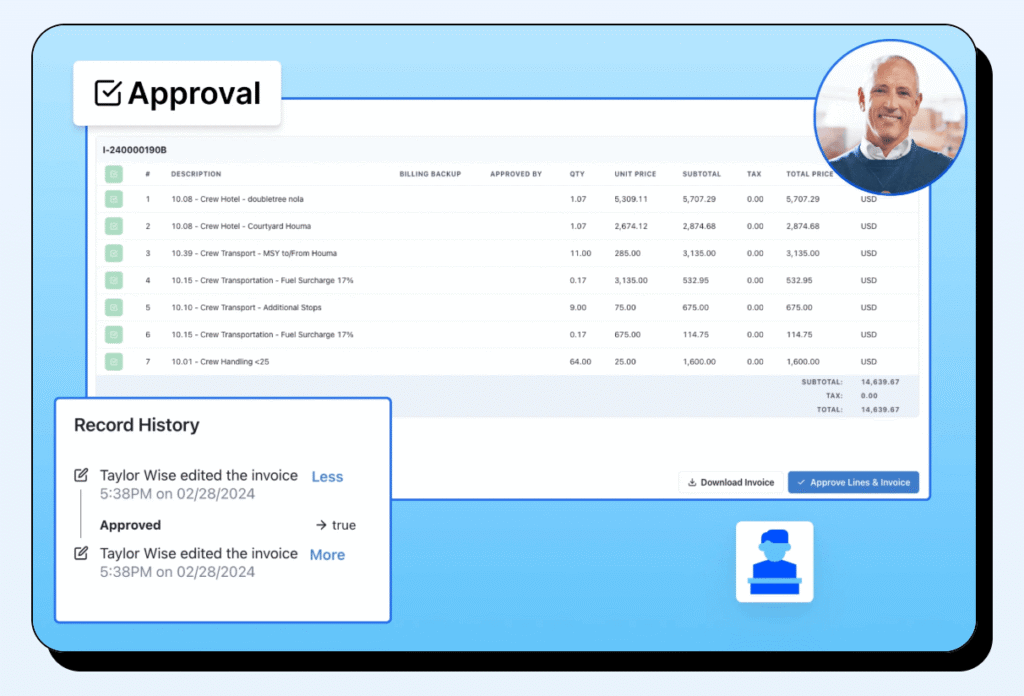
Base is built around a simple operational idea: every port call deserves one living record that ties together ops, documents, costs, and communication. That matters for exception management because exceptions don’t stay in one lane. A timing shift becomes a service change becomes a document update becomes a cost variance conversation.
Base supports exception management through a few practical mechanics that match how vessel agents and port teams work in the trenches:
A single job timeline that stays truthful as things change
When the ETA shifts or the berth changes, the job record is where that truth gets updated and kept consistent. Teams stop relying on “latest thread” archaeology and start relying on a shared source of truth.
An activity feed that captures decisions as they happen
Instead of exceptions being handled in scattered messages that disappear into personal inboxes, Base keeps the operational record tied to the job. That’s critical when you need to answer questions like: When did we know? Who approved? What changed?
Documents live with the job, not in a scavenger hunt
A huge slice of exceptions are document-related. When the right version of a form, a certificate, or a checklist is tied to the job, teams spend less time chasing and more time executing. This is also where discipline like a vessel agent checklist becomes operational memory instead of a personal habit—something the team can share, reuse, and audit.
Costs and backup tie back to the operational story
Exceptions often show up later as “why is this line here?” When costs, receipts, approvals, and context are attached as the work happens, the closeout becomes less of a reconstruction project.
Permissions and scoped collaboration
Port calls involve parties who need visibility, but not full internal access. Base’s role-based permissions help teams share what matters without opening the entire internal workflow. That matters when exceptions involve principals, vendors, or external stakeholders who need timely context.
A repeatable structure without forcing sameness
The goal isn’t to make every call identical. Port work has variability baked in. The goal is to give teams a repeatable operating rhythm that can handle variability without losing control. That’s why Base supports structured work while still matching the reality of call-to-call differences—especially in high-change environments.
Under the hood, Base’s core modules reflect this “one record” approach: Jobs as the operational spine, an Inbox/activity feed for live updates, document templates for consistent outputs, and accounting workflows that keep the money trail tied to the work.
And from a product standpoint, the UI and workflow layout reinforce the same thing: your jobs, projects, and financial records live in one system, built for multi-party coordination and defensible records.
If you’ve ever had to explain an exception two weeks later with nothing but forwarded emails and a fuzzy memory, you already know why this matters.
Conclusion on Exception Management
Exception management in port operations is less about heroic recovery and more about disciplined control: catching deviations early, assigning ownership, keeping the shared truth current, and leaving behind a record that holds up under review.
The teams that do this well aren’t magically spared from delays, vendor constraints, or document surprises. They simply handle them in a way that protects the timeline, protects the relationships, and protects the closeout.
If you want to see how Base supports exception handling inside real port call workflows—ops plus documents plus costs in one job record—contact Base and ask for a walkthrough mapped to how your team actually runs calls.
Key takeaways
- Exceptions are any deviations from the expected plan during a port call: timing, services, documents, approvals, compliance, or cost capture.
- The real risk isn’t the exception itself; it’s handling it without a shared, reconstructable record.
- A workable exception process names the deviation clearly, assigns an owner, coordinates updates across parties, documents decisions, and closes the loop after departure.
- Many recurring exceptions trace back to the same roots: ETA drift, terminal changes, vendor constraints, document version issues, approval ambiguity, and delayed cost capture.
- Systems that tie ops + documents + money into one job record make exception management easier to execute and easier to defend later.
Frequently Asked Questions
What is an example of management by exception?
In port and logistics operations, management by exception means leadership steps in only when deviations from plan require judgment or escalation. For example, a vessel call proceeds under normal coordination until a service provider reports a delay tied to port congestion. That delay triggers automated alerts to the assigned operator, who conducts an impact assessment on berth windows, pilotage, and downstream commitments. If the delay could create a ripple effect across the broader supply chain, the matter is escalated to the manager who is responsible for that account.
Instead of reviewing every routine confirmation, the manager focuses on shipping exceptions that carry financial, compliance, or reputational weight. This allows teams to prioritize attention where many exceptions can compound quickly. In a practical setting, this might involve tracking shipments, confirming service availability, reviewing potential regulatory issues, and coordinating with relevant stakeholders to keep the call aligned. That focus supports resolving disruptions without dragging leadership into routine tasks that can be handled at the operational level.
What is the exception management technique?
The technique centers on identifying when exceptions occur, evaluating their scope, and routing them through a defined response path. In maritime and logistics contexts, this often overlaps with supply chain exception management, where a delay, documentation mismatch, or equipment issue can affect inventory, scheduling, and customer commitments.
A disciplined approach to effective exception management typically includes real-time visibility, clear ownership, and structured communication. When teams rely heavily on manual processes, responses can become time consuming, especially when data is scattered across emails and spreadsheets. That increases the chance of missed signals and slows analysis of root causes.
A stronger method connects operational updates directly to the shipping process, enabling teams to select efficient paths for resolution. This helps mitigate risks, reduce exposure to inventory shortages, and limit escalation. Over time, consistent execution contributes to lower costs, stronger coordination across companies involved in the call, and a more stable operational posture.
What does exception mean in simple terms?
In simple terms, an exception is anything that interrupts the expected plan. In port and logistics work, that might mean late arrivals, damaged goods, compliance gaps, or a vendor failing to meet a confirmed window. These disruptions can affect the broader business, particularly when they interfere with cargo flow, documentation, or payment cycles.
Because port activity connects to the larger supply chain, even a small issue can affect timelines and customer commitments. That’s why exception management important to operations teams—it protects the organization’s good standing with partners and regulators, helps avoid customer dissatisfaction, and supports improved customer satisfaction through consistent communication and response.
When handled properly, exception management strengthens resilient supply chains by creating visibility and accountability. Instead of reacting ad hoc, teams are able to manage deviations methodically, reducing exposure and keeping performance aligned even when conditions shift.